
During the five-day event, Cubo Itaú welcomed hundreds of people interested in topics such as Innovation and Energy, Sustainable Construction, the Bioeconomy, Climate Change and Society, COP30, and Agriculture and Carbon
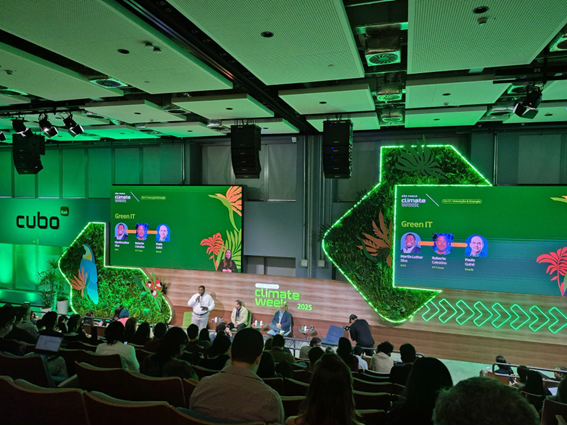
São Paulo Climate Week – an event focused on discussing solutions to the challenges of climate change – took place from August 4 to 8 at entrepreneurship hub Cubo Itaú. Domestic and international specialists, business executives, startup leaders, public sector representatives and members of civil society came together for a series of debates, panels and other activities divided into five broad areas: Innovation and Energy; Sustainable Construction; the Bioeconomy, Climate Change and Society; COP30; and Agriculture and Carbon.
Vale and Fundo Vale were present at the event, contributing significantly to the discussions and panels focused on tackling the climate crisis. Rodrigo Lauria, Vale’s climate change and carbon director, took part in a panel called “Rare Minerals and AI: Sustainable Innovation in Global Supply Chains.” A Vale Institute of Technology executive participated in a discussion on biodata.
“São Paulo Climate Week is one of the most robust events in Brazil for the climate agenda, especially due to the quality and diversity of its lineup, which addresses everything from technological advances and innovation to social issues and the bioeconomy. This comprehensive approach drives deep and practical discussions between different sectors, showing how collaboration and wide-ranging dialogue can generate concrete solutions to social and environmental challenges,” said Patrícia Daros, Fundo Vale’s director.
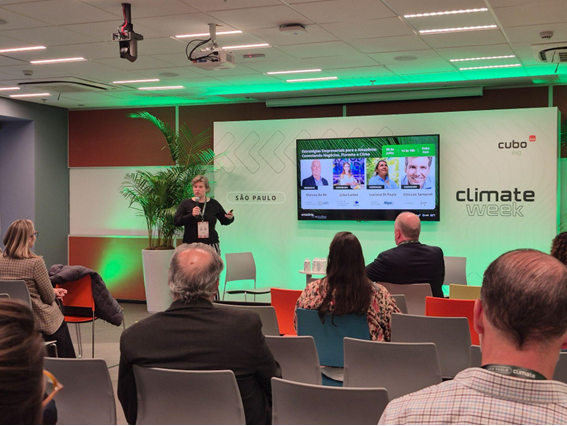
One of the highlights of the event was a panel discussion called “Business Strategies for the Amazon: Connecting Business, Forest and Climate.” This side event was organized by Fundo Vale, Cubo ESG and the CERTI Foundation, with technical support from Numerik, through the Amazon at Cubo Itaú Community. Aimed at executives and leaders engaged in sustainable development in the Amazon region, the meeting featured panelists Marcos Aurélio Da Ré from the CERTI Foundation, Susy Yoshimura from Carrefour Brasil, Estevan Sartoreli from Dengo Chocolates and Luciana Di Paula from Algar Farming. The moderator was Giovana Serenato from Fundo Vale’s Innovation Area.
How to boost the bioeconomy in the Amazon
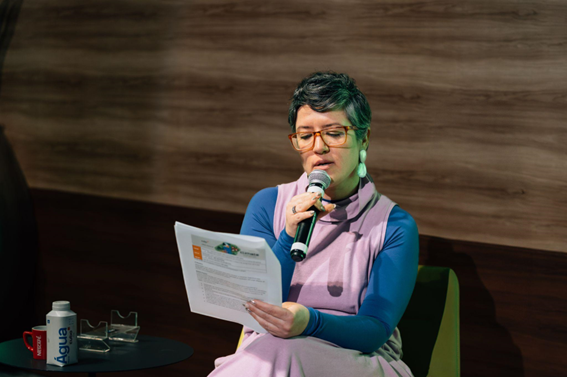
Curated by Fundo Vale, the panel “From Investee to Investor: How to Boost the Bioeconomy in the Amazon” brought together representatives of initiatives linked to innovation and sustainable entrepreneurship across the region. The debaters were Átila Denys from law firm DDL Associados, Gabriela Souza from the Amazon Impact Accelerator (AMAZ), Julia Tatto from Assobio and Marcelo Salazar from Mazô Manah. The panel was moderated by Liz Lacerda from Fundo Vale’s Amazon and Partnerships Area.
The participants discussed the importance of adapting financial mechanisms to Amazonian circumstances – marked by structural challenges such as logistics, land tenure reform and the scalability of business models – and of developing public policies that encourage the emergence and financial sustainability of impact businesses. As Lacerda summed up, “Our goal is to talk about how to boost the bioeconomy in the Amazon, exploring the path from investee to investor and sharing practical insights for the region’s sustainable development.”
The conversation made clear that the proactive involvement of local organizations and the strengthening of collaborative networks – whose participants may range from community cooperatives to large investment funds – are key to creating businesses that combine financial results with social and environmental impact.
Marcelo Salazar, citing his own career path, noted that long-term success lies in the formation of diverse and cooperative ecosystems. “The forest is diversity. For each product, there are numerous chains, and only together can we move forward,” he said, emphasizing that the involvement of communities as business partners is a crucial innovation to ensure not only income generation but also forest conservation.
In turn, Gabriela Souza pointed out that “the reality in the Amazon is pre-competitive; it requires approaches, capital and technical support tailored to local conditions.”
When addressing the private sector’s role and the need for financial innovation, the panelists emphasized solutions such as blended finance, hybrid funds, and research and development partnerships with universities, as well as advocacy for public procurement and certifications as ways to unlock new markets. “The real risk isn’t in innovating; it’s in continuing to rely on business models that disregard nature,” argued one of the participants, adding that the bioeconomy sector needs to be seen not as emerging, but as lacking systemic investments similar to those that have driven agribusiness.
The panelists concluded that in order to transform the bioeconomy into a strategic vector for sustainable development in the Amazon, it is essential to integrate ancestral knowledge, robust public policies, financial creativity and broad collaboration, inviting investors and entrepreneurs to see the region’s unique potential and create forest businesses.
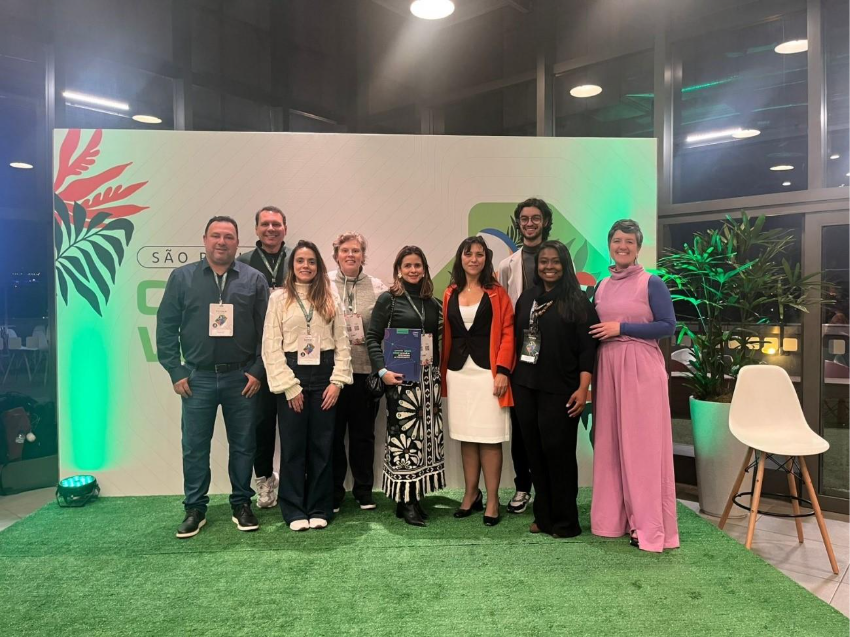
Also read: Sponsored by Fundo Vale, ICC study “Brazil’s potential in the knowledge bioeconomy” is launched at 2025 São Paulo Climate Week.