Investment
cumulative data from 2020 to 2025
+ R$ 372 M
total investment
Vale’s 2030 Forest Goal is the company’s voluntary commitment to protect and restore 500,000 hectares beyond its legal obligations and operational boundaries by the end of the decade. The initiative is a response to the climate emergency and is aligned with another company target: achieving net-zero emissions by 2050.
It is implemented by Fundo Vale, Vale’s Natural Resources and Protected Areas Department and the company’s Climate Change team, with support from the Vale Institute of Technology (ITV) and an extensive network of partners. The initiative involves public-private partnerships, is aligned with national and international sustainability agendas and has the potential to serve as a benchmark model for the private sector in implementing voluntary actions that generate tangible benefits for nature and people on a large scale.
All activities are carried out transparently, based on data and evidence, and designed to ensure that positive impacts endure beyond 2030.
Our 2030 Forest Goal reached its fifth year with steady progress in the restoration and protection of land, as well as in the consolidation of a model built on impact businesses, strategic partnerships and innovative financing arrangements.
We have achieved
45%
of our target
+ 225 K
hectares
protected or restored
This progress reflects the evolution of the strategy and the lessons learned regarding risk, scale and the time required for nature-based solutions to improve ecosystems’ health and quality, demonstrating that the results extend beyond the numbers.
The results include:
We have prepared a special video highlighting the progress of our 2030 Forest Goal and showcasing the collaboration of key partners that have helped advance the initiative. The video highlights the main results achieved over the past five years and underscores the importance of this commitment to our sustainability agenda.
cumulative data from 2020 to 2025
+ R$ 372 M
total investment
data from 2021 to 2025
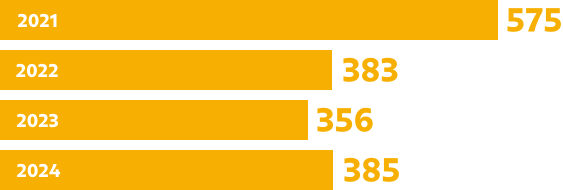
+ 350
Jobs created per year from 2021 to 2024
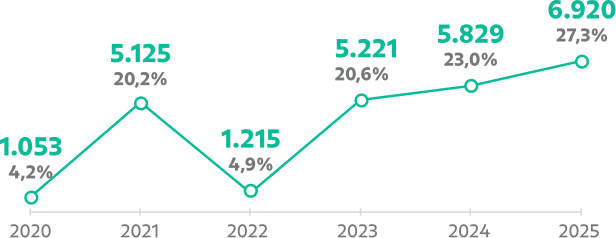
cumulative data from 2020 to 2025
Total hectares restored
+ 25.360
Hectares restored per year
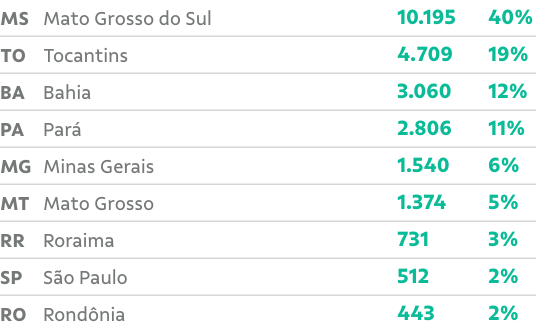
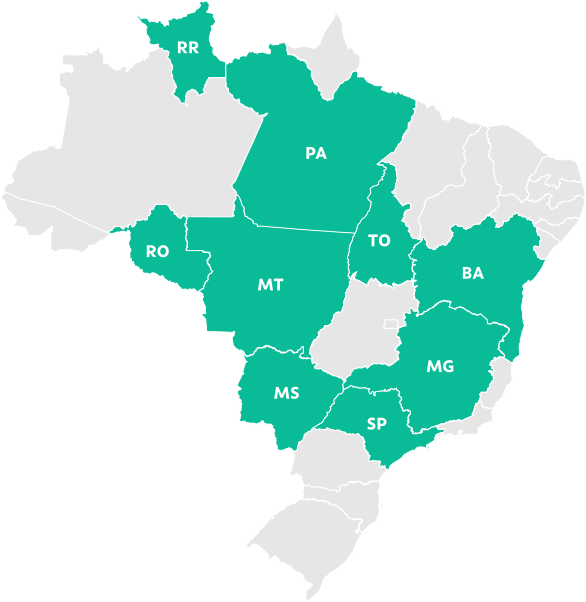
Hectares restored by state
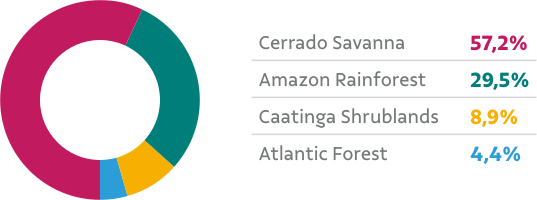
Hectares restored by biome
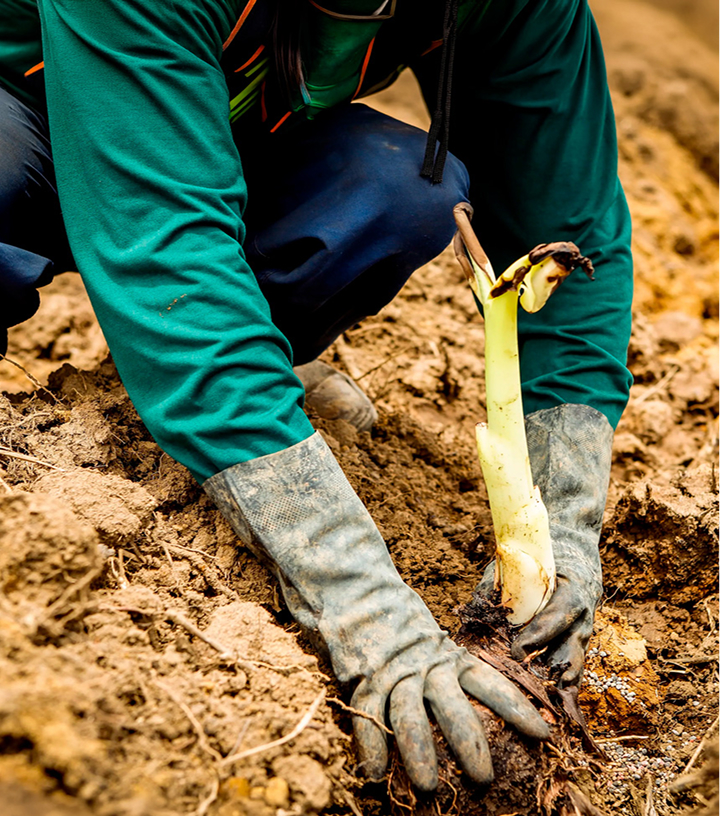
Beyond restoring land, we invest in the sustainability of value chains associated with productive restoration, focusing on capacity building, the establishment of pilot planting areas and benchmark production systems. We also support research, knowledge dissemination and innovation applied to social and environmental safeguards.
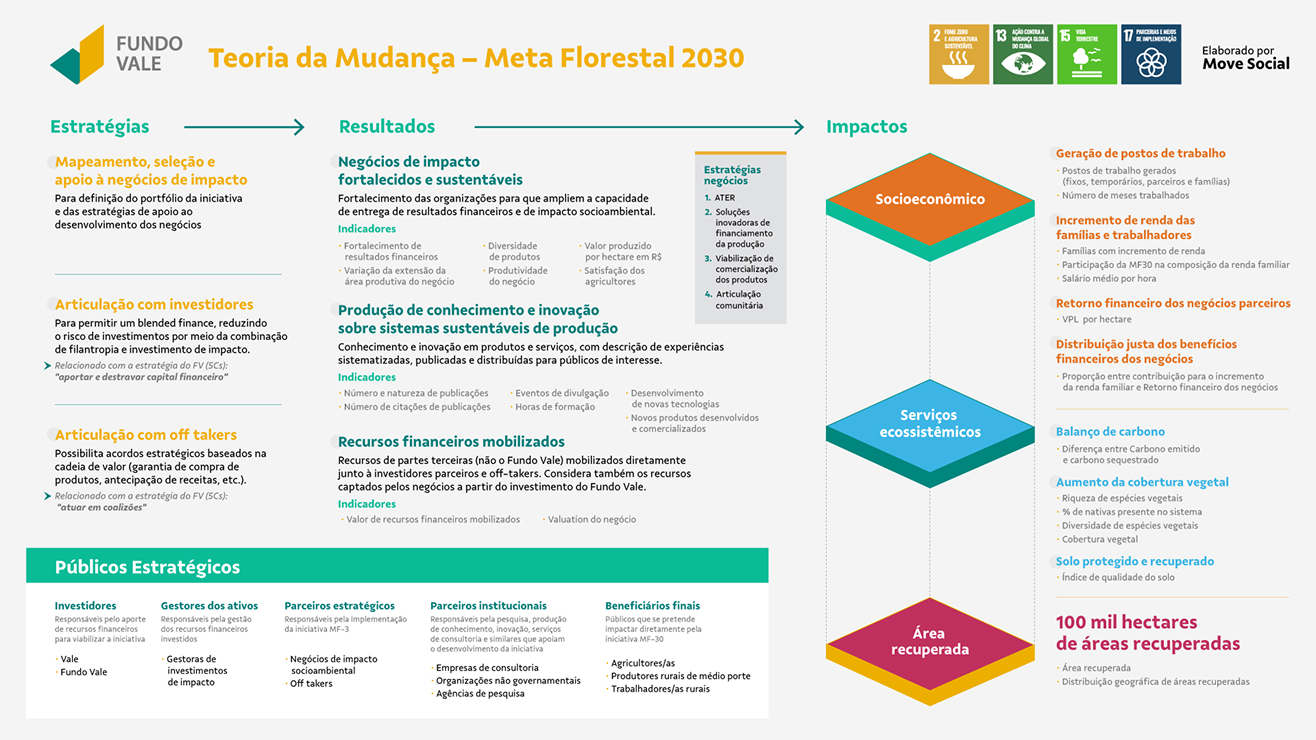
Define the initiative’s portfolio and strategies for supporting business development
Enable blended finance, reducing investment risk through the combination of philanthropy and impact investing
Enable strategic agreements based on value chains (product purchase guarantees, revenue prepayments, etc.)
Strengthened and sustainable impact businesses
Strengthen organizations so they can expand their capacity to deliver financial as well as social and environmental impact result
Knowledge generation and innovation in sustainable production systems
Knowledge and innovation in products and services, including documented, published and disseminated experiences for target audiences
Resources from third parties (other than Fundo Vale) mobilized directly from partner investors and offtakers, including resources raised by businesses as a result of Fundo Vale’s investment
Responsible for providing the financial resources needed to enable the initiative
Responsible for managing invested financial resources
Responsible for implementing the 2030 Forest Goal initiative
Responsible for research, knowledge generation, innovation, consulting services and similar activities that support the development of the initiative
Groups that the 2030 Forest Goal initiative aims to impact directly
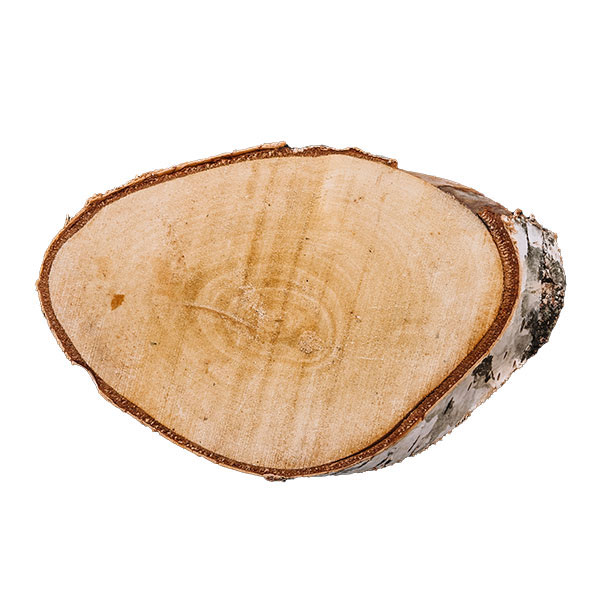
Sustainably managed timber
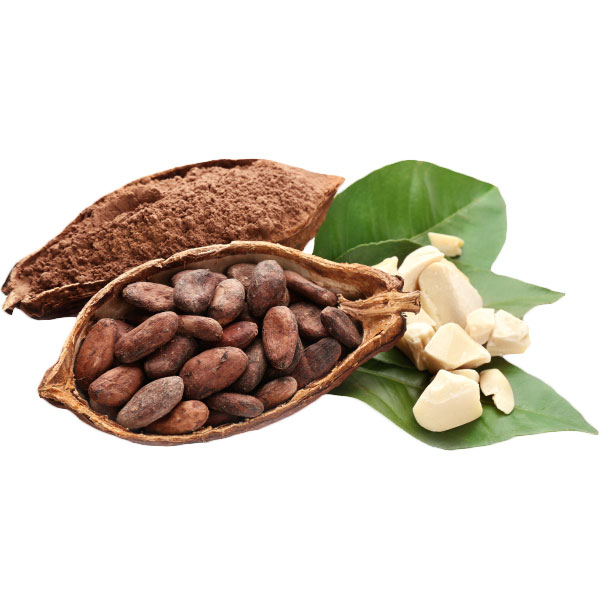
Cocoa
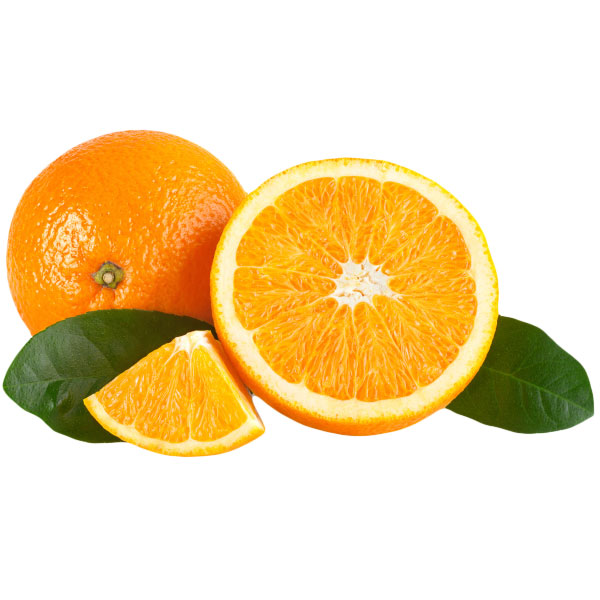
Oranges

Sustainable beef
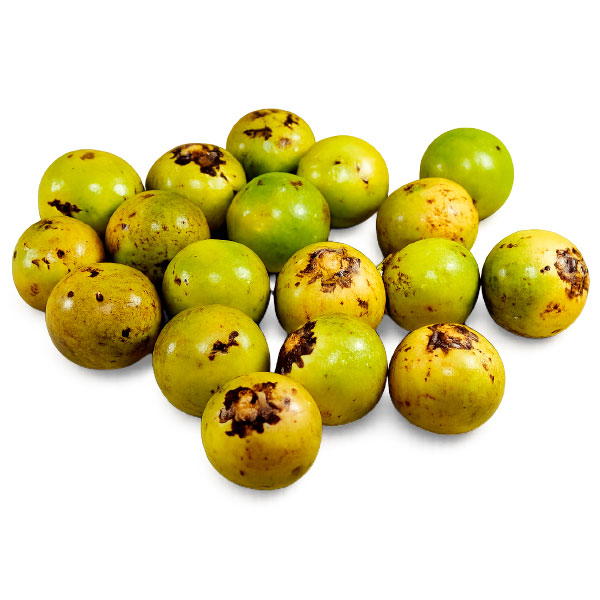
Macaúba
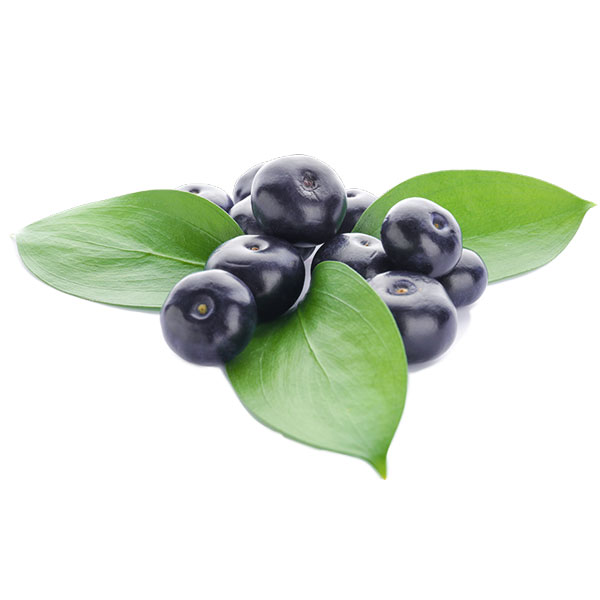
Açaí

Bananas
We have a diverse portfolio of businesses:
Supported business portfolio:


Businesses supported through proofs of concept:
Forest fund:
To maximize our impact, we work with:





Managed by the Vale Natural Reserve and Vale’s Nature-Based Solutions Department, the strategy to protect 400,000 hectares by 2030 involves partnerships with environmental agencies to support conservation areas in high-priority regions, selected based on social, environmental and economic criteria. This integrated approach makes it possible to:
The strategy directly contributes to achieving the goals of the Kunming-Montreal Global Biodiversity Framework, which aims to protect 30% of natural areas by 2030.
1.424
hectares
Goytacazes National Forest (administered by ICMBio)
Linhares, Espírito Santo
10.459
hectares
Serra das Torres State Natural Monument (administered by IEMA)
Atílio Vivácqua, Mimoso do Sul and Muqui, Espírito Santo
3.000
hectares
Duas Bocas Biological Reserve (administered by IEMA)
Cariacica, Viana and Santa Leopoldina, Espírito Santo
38.053
hectares
Cunhambebe State Park (administered by INEA)
Angra dos Reis, Mangaratiba, Rio Claro and Itaguaí, Rio de Janeiro
3.598
hectares
Augusto Ruschi Biological Reserve (administered by ICMBio)
Santa Teresa, Espírito Santo
50.892
hectares
Mata Escura Biological Reserve (administered by ICMBio)
Jequitinhonha and Almenara, Minas Gerais
7.757
hectares
União Biological Reserve (administered by ICMBio)
Casimiro de Abreu, Macaé and Rio das Ostras, Rio de Janeiro
115 K
hectares
Total area protected through partnerships with conservation areas
85 K
hectares
Total area protected through REDD+ projects
The impact carbon credit generation strategy for Vale’s 2030 Forest Goal integrates environmental conservation and social development, promoting forest protection with direct benefits for local communities.
Through this approach, Fundo Vale established a partnership with the Algar Group for the Reducing Emissions from Deforestation and Forest Degradation (REDD+) project carried out at Fazenda Pacajá, a property in northern Pará. The project is dual-certified for carbon credit generation under the Verified Carbon Standard (VCS), an international benchmark for carbon measurement quality, and the Climate, Community & Biodiversity (CCB) Standards. These certifications require projects to demonstrate social and environmental impact, including fair sharing of benefits, respect for human rights and recognition of neighboring communities. The project also holds Forest Stewardship Council (FSC) Forest Management Certification, which recognizes responsible forest management practices, as well as Jaguar Certification, awarded to initiatives that implement practices aimed at conserving jaguars and their habitats.