
Fundo Vale supports the pirarucu initiative and boosts a project that turns socio-biodiversity into opportunities for Amazonian communities.
Long before it became a global trend, the bioeconomy was already a living reality in the Amazon. Based on the sustainable use of natural resources, this traditional practice has sustained local communities and shaped their cultures, and it now represents a promising path for the region’s development without ecological destruction. Many initiatives have become strategic for generating value, income, inclusion and, in the case of women, female empowerment.
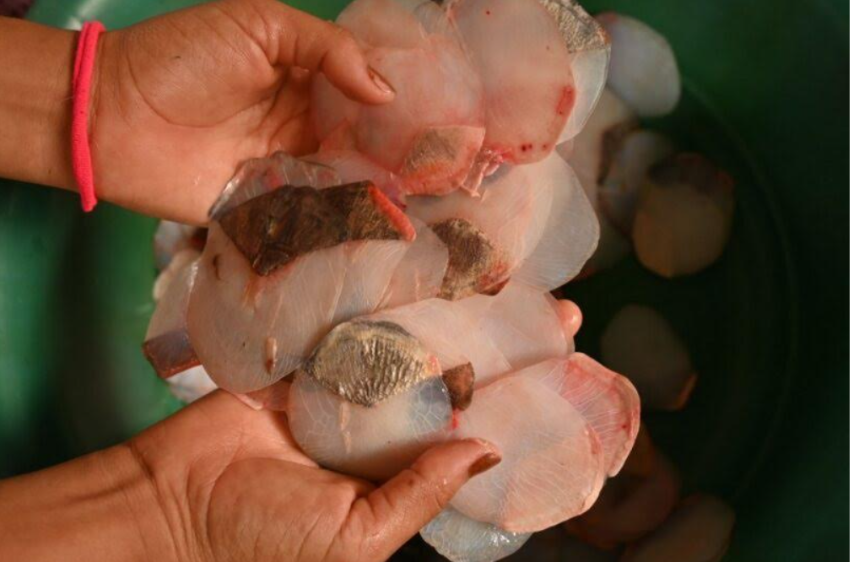
This is what is happening to women in the community of Xibauázinho, in the municipality of Carauari, in the Central Juruá region. Accustomed to cultivating traditional crops like açaí, Brazil nuts and buriti palm, these women are gaining new prospects by transforming the scales of pirarucu – one of the largest freshwater fish in the world – into bio-jewelry. What was once discarded is now reborn as art, taking the form of rings, necklaces, bracelets and other artifacts.
As a result of a training workshop held in June of this year, 45 women from the region have become artisans as members of two bio-jewelry production centers. They have already been holding exhibitions, participating in local craft fairs and taking direct orders from customers.
The pirarucu initiative, supported by the Vale Fund, promotes investment in the circular economy and socio-biodiversity through a project coordinated by the Association of Rural Producers of Carauari (ASPROC), as a path to women’s empowerment and income generation, made possible by nature and social and environmental responsibility.
Sustainable pirarucu management
The scales used by the artisans come from pirarucu sustainably managed by the collective brand Gosto da Amazônia (“Taste of the Amazon”) – a direct result of the work coordinated by ASPROC in lakes in the Central Juruá region, in addition to 10 other management areas spread throughout the Amazon. This production model respects the natural cycle of the fish, contributes to the conservation of the species and generates direct benefits for local communities.
Supported by Sustenta.Bio – a program created by the Chico Mendes Institute for Biodiversity Conservation (ICMBio) and Fundo Vale – the production scheme coordinated by ASPROC is recognized nationally and internationally as an example of sustainable fishery resource management. The initiative is helping improve infrastructure, logistics, governance and market access while expanding opportunities for income generation from social and biological diversity. In this way, the management of pirarucu, which already guarantees food and income for hundreds of extractive producer families, is connected to a broader movement to enhance the value of the Amazonian bioeconomy, while also transforming fish waste into art and beauty.
Workshop
In addition to encouraging female empowerment and income generation, the workshop is a concrete example of how traditional knowledge and sustainability can go hand in hand to promote social inclusion and harnessing of Amazonian resources. In the opinion of Aline Gouveia, an artisan and coordinator of the bio-jewelry project, the workshop was more than just a craft course – it was a powerful initiative to promote the circular economy, social sustainability and female empowerment, by transforming previously discarded pirarucu scales into art, employment and income.
“What moves me the most is seeing how this learning process restores women’s self-confidence. The sparkle in their eyes, the smile of satisfaction and the pride they show when displaying their finished pieces reveal the discovery of new talents and the reaffirmation of each woman’s value. For them, these items are not just beautiful accessories, but the realization of a dream and new opportunities in life,” Gouveia says.
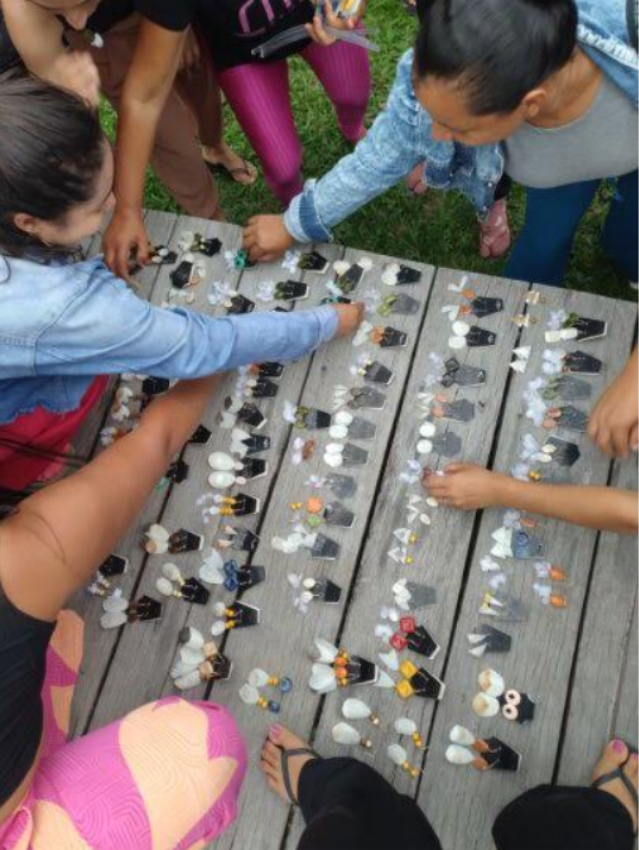
The “Iaras of the Amazon” (beautiful, mythical figures from Brazilian folklore who are similar to mermaids or sirens), as the artisans of the Central Juruá region have been dubbed, are already reaping the rewards of their work. After the workshop held in June, two bio-jewelry production centers were created, one in the community of Xibauá and the other in the community of Vila Ramalho, coordinated by a local youth organization. The members of the Central Juruá Association of Female Agricultural and Extractive Producers (ASMAMJ) are selling their bio-jewelry at local craft fairs and through orders. “We are taking these women out of the complacency generated by the region’s difficult access and promoting a movement of empowerment,” says Gouveia, who created a WhatsApp group to continue training the students through tutorials.
Pirarucu scales have unique characteristics such as shine, rigidity and size, which make them ideal for creating bio-jewelry and decorative pieces. By transforming this waste into art, the project encourages sustainable practices and promotes income generation in traditional communities.