
A study by ICC Brasil, supported by Fundo Vale, details how the knowledge bioeconomy could add up to US$140 billion to the Brazilian economy by 2032 and reposition the country at the forefront of innovation in biodiversity
The knowledge bioeconomy is defined as an advanced branch of the traditional bioeconomy, integrating science, technology and innovation with the wisdom of traditional peoples and turning biological assets into high value-added products and services. Driven by three converging revolutions – biological (biotechnology and genetic editing), digital (artificial intelligence and automation) and sustainable (circularity and traceability) – it is boosting Brazil’s productive complexity, making it a global supplier of cutting-edge solutions rather than a mere exporter of natural resources.
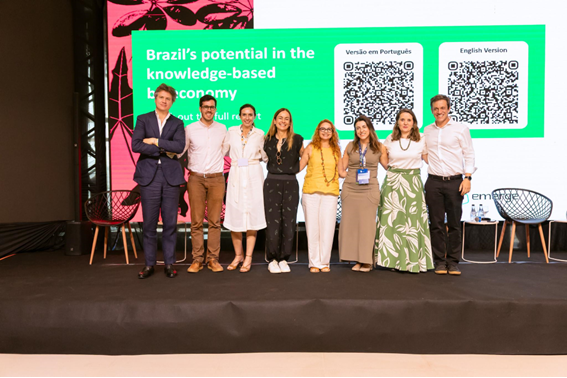
A new study titled “Brazil’s Potential in the Knowledge Bioeconomy,” produced by the Brazilian arm of the International Chamber of Commerce (ICC Brasil), with technical support from Systemiq and Emerge and sponsored by Fundo Vale, reveals that the country could add between US$100 billion and US$140 billion to its economy by 2032 in five strategic sectors: food, health, materials, cosmetics and agribusiness. The research brought together more than 100 experts and companies to identify bottlenecks, map scientific and technological assets, and propose an agenda of public policies, financial instruments and market mechanisms capable of unlocking Brazil’s bioeconomic potential, especially in the Amazon.
According to Andrew Wilson, the ICC’s global director, the report’s main contribution is to reposition the climate agenda as a driver of competitiveness rather than a cost. In his opinion, the Brazilian study offers a concrete response to the growing economic pressure imposed by extreme events by quantifying their impacts while proposing growth pathways based on biotechnological innovation, digitization and new business models. Wilson said that the publication may serve as a reference on how to structure, within a single framework, both the cost of inaction and the potential gains associated with a low-carbon economic transition anchored in the bioeconomy.
Technical analysis conducted by ICC Brasil structures the knowledge bioeconomy around three central movements: creating production chains from biodiversity assets that have not been studied much; adding value to already well established chains by replacing fossil inputs with biological solutions; and scaling up disruptive biotechnologies, such as synthetic biology, precision fermentation and genetic editing, harnessing the country’s existing scientific infrastructure (Embrapa, Fiocruz, universities and regional institutes). The authors show that although Brazil has the greatest biodiversity on the planet, the Amazon is only the third most studied biome in terms of genomics and molecular characterization, behind the Cerrado Savanna and Atlantic Forest. Furthermore, the country remains virtually irrelevant when it comes to patents associated with the bioeconomy.
During a panel discussion held to launch the study, Fundo Vale Director Patrícia Daros emphasized that the report’s findings are consistent with the organization’s trajectory in the region.
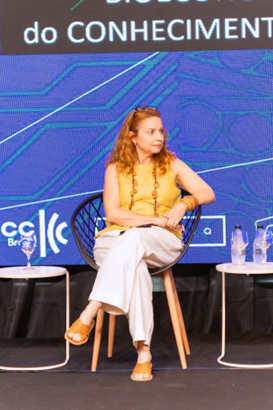
“We have been looking at the Amazon and the bioeconomy for 16 years. The same challenges persist: science and technology, innovation and entrepreneurship, capital supply, market development and enabling services, as well as regulatory frameworks. To move forward, we are supporting the ecosystem with collective impacts, such as the creation of the first business accelerator in the region, and systemic agendas in partnership with ministries and other government bodies. We have been working with the Vale Institute of Technology (ITV) in Belém to study production chains such as cocoa, açaí berries and pirarucu fish, sequencing the genomes of 80 species, since we still know very little about Amazonian biodiversity. It is essential to attract different types of capital and engage large companies in financial mechanisms to drive this strategy forward,” she said.
Implementation roadmap
The panel also featured Carolina Carregaro of Nestlé, Angela Pinatti of Natura and Luciana Nicola of Itaú Unibanco, representing different links in the value chain, from food and natural input production to long-term financing. The participants agreed that the report has helped organize a roadmap for Brazil by highlighting gaps in knowledge about biodiversity, obstacles to transforming research into applied innovation, and challenges in accessing capital, especially for small producers, cooperatives and impact businesses in the Amazon.
According to the companies and financial institutions represented on the panel, the study answers a recurring question: how large is the opportunity and where will it materialize first? By estimating an additional potential of US$100 billion to US$140 billion in economic value and associating it with numerical targets (such as increasing genetic mapping 10-fold, the number of startups 20-fold and the application of biotechnology in productive sectors 10-fold by 2032), the report offers a pragmatic roadmap to guide investments, credit and industrial policies.
As Patrícia Daros summed up at the end of the debate, the central message is one of urgency and a focus on implementation. “We are losing time. We need to attract patient and catalytic capital and ensure that it quickly reaches where it is needed. Scale will come with the implementation of public policies, such as the Bioeconomy and Innovation Park in Belém and other national policies,” she said.