
Sponsored by Fundo Vale, event was marked by dialogue and commitment to concrete solutions for the future of the Amazon region
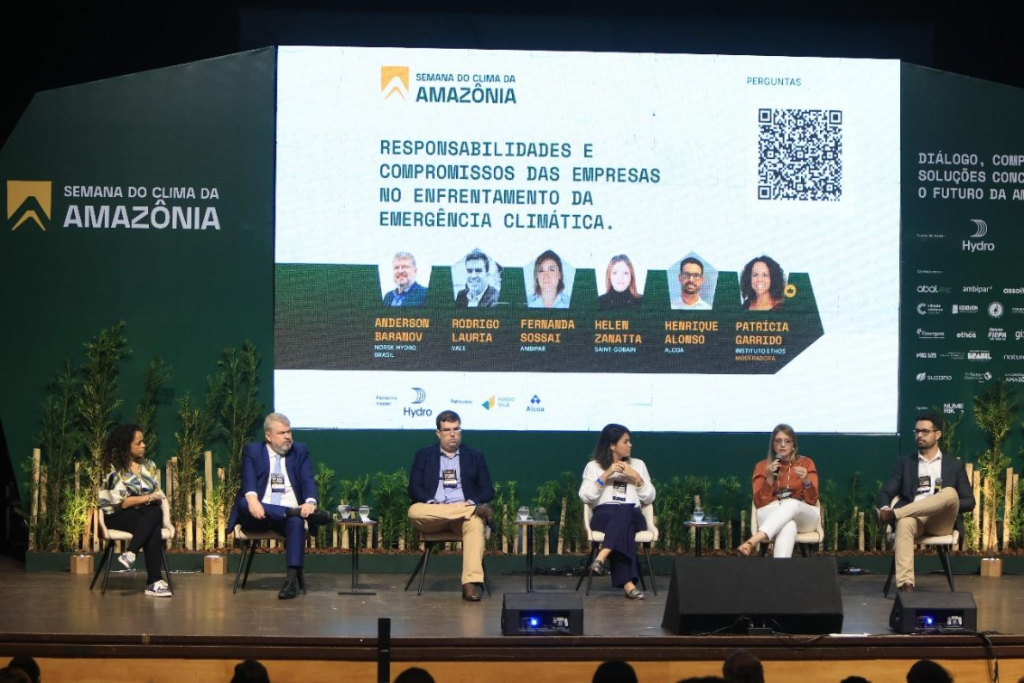
Amazon Climate Week, held from July 14 to 18 in Belém, brought together representatives of government, the private sector, civil society and traditional communities for a major meeting dedicated to building sustainable solutions for the future of the region. Coordinated by more than 20 organizations from different sectors, the initiative featured a variety of activities, including thematic panel discussions, leadership meetings, cultural performances and self-managed sessions spread across multiple areas of the city.
During the week, topics such as the just transition, the harnessing of natural resources and ways to create a permanent legacy for the Amazon’s peoples were explored in pluralistic debates on low-carbon economies, the bioeconomy, land use, community tourism and the social, economic and environmental challenges facing the region. The event also included a cultural program, with performances by singers Lia Sophia, Nilson Chaves and Fafá de Belém, as well as field visits to bioeconomy businesses.
“The idea was to create a movement inspired by international climate weeks, such as those in New York and London, while encouraging debate with those who live and work in the Amazon, sharing local people’s views,” says Márcia Soares, Fundo Vale’s Amazon and partnerships manager, who served on the event’s organizing committee. “We want the event to become part of the Amazon agenda and to be rotating, visiting other large cities in the region each year.”
The opening session featured Patrícia Daros, Fundo Vale’s director; Marcello Brito, executive secretary of the Amazon Consortium of State Governors; Anderson Baranov, CEO of Hydro’s Brazilian arm; André Guimarães, executive director of the Amazon Environmental Research Institute (IPAM) and civil society special envoy to COP30; Alex Carvalho, president of the Pará State Federation of Industry (FIEPA); Caio Magri, CEO of the Ethos Institute; Joaquim Belo, director of the National Council of Extractive Producers; and Ricardo Mussa, chairman of Sustainable Business COP30. They set a tone of cooperation combined with urgency for the discussions, reinforcing the need for dialogue between different sectors to respond to the environmental, social and economic challenges of the Amazon.
According to Patrícia Daros, Amazon Climate Week represented a step beyond debate. “Our goal is to transform dialogue into action. Climate Week sought concrete proposals and systemic initiatives capable of ushering in a new model of sustainable development for the Amazon, in which environmental preservation goes hand in hand with social justice and economic opportunities, always connected to local realities and the great challenges of our time,” she says.
The role of mining in the transition
The panel “The transition to a low-carbon economy and the role of essential minerals” brought together leading figures from the mining sector, including Rodrigo Lauria, Vale’s climate change and carbon director. He emphasized the strategic importance of minerals produced in Brazil for the global clean technology chain, while highlighting Vale’s commitment to balancing economic growth with environmental responsibility. The panel addressed the challenges and opportunities of spearheading initiatives that accelerate decarbonization, citing examples of innovative practices at the company involving both emissions control and investment in research for sustainable mining.
On July 16 and 17, Fundo Vale and the Vale Institute of Technology (known by its Portuguese initials, ITV) hosted six panels that brought together specialists, companies and leaders to discuss practical and innovative solutions to the climate crisis and the challenges involved in preserving biodiversity, especially in sensitive areas of the Amazon region. See the topics discussed below.
MapRios – Mapping Land Use Along Rivers
The MapRios initiative was presented as an essential tool for mapping cumulative land use along Brazil’s rivers, with a strategic focus on the Amazon. Experts discussed the impacts of land use changes, such as deforestation and illegal activities, on aquatic ecosystems and river health, emphasizing the importance of integrated watershed management. The panel highlighted how this initiative seeks to provide unprecedented information to promote the sustainable use of water resources and biodiversity conservation, innovatively combining federal and regional data.
Climate Action – Global Private Solutions
The second panel brought together businesses and other private sector representatives to share their experiences of tackling the climate crisis, showing how companies have been increasingly mobilizing. The participants described practical cases of businesses and technologies that are helping mitigate the effects of climate change through alignment with the Paris Agreement goals, investments focused on sustainability and innovative partnerships.
Zero Net Loss of Biodiversity in Mining – Challenges and Solutions
This panel deepened the debate on the search for balance between mineral production and environmental conservation. Companies, researchers and biodiversity experts shared their experiences and strategies aimed at protecting ecosystems during mining. The event highlighted international and national best practices, discussed advances in public policy and emphasized the importance of ongoing dialogue between the private sector and global conservation initiatives to ensure that development in the Amazon occurs responsibly and with respect for local ecological wealth.
The Role of Forests in Combating the Climate Crisis
In this panel, specialists discussed the function of tropical forests beyond carbon storage, highlighting the role of these ecosystems in regulating climate, reducing temperatures and maintaining the water cycle. The debate also emphasized the urgent need to restore forests and their capacity to protect vital communities and ecosystems, placing the Amazon at the center of solutions for climate mitigation and adaptation. The panel also stressed the need for integrated policies to ensure the conservation and expansion of forestland.
Challenges and Technologies for Scaling Up Sustainable Production Systems
The participants addressed challenges such as access to financing and technical knowledge, cultural barriers, and difficulties faced by producers, especially small and medium-sized ones. The panel presented innovative solutions – including remote monitoring technologies and new management systems – that are revolutionizing production chains. The debate also highlighted the importance of unity between economic, environmental and social stakeholders as key to promoting inclusion, climate justice and economic viability, while signaling trends toward strengthening regenerative practices and sustainable businesses.
Forest Economy – The Role of Extractive Reserves in Environmental Protection and the Bioeconomy in the Amazon
Community representatives and experts showed how extractive reserves align environmental conservation practices with income generation and cultural support for forest peoples. The panel showed examples of success in containing deforestation and preserving traditional ways of life, but also brought to light challenges involving logistics, market access and public policies for strengthening these areas. The discussion stressed that valuing extractive reserves as pillars of the forest economy and supporting extractive communities means investing in a vibrant bioeconomy and production chains aligned with sustainability.
Bioeconomy Situation in Brazil – Advances in Public Policies
A panel on public policies for the bioeconomy emphasized Brazil’s potential to lead this agenda globally. Specialists and public managers presented advances such as the National Bioeconomy Strategy (2024) and the Pará State Bioeconomy Plan (PlanBio) – high-profile initiatives to encourage productive practices that combine forest preservation, income generation and innovation. The debate also highlighted the leading role that Brazil has assumed in the G20 by defining High-Level Principles for the Bioeconomy, demonstrating international alignment and leadership. Implementation challenges, the need for investment and the strengthening of social and biological diversity chains were identified as areas of focus to further reinforce public policies and Brazil’s strategic positioning in the new green economy.
Takeaways
Amazon Climate Week ended with a letter summarizing the week and the reflections made by its participants. In the document, the organizers reaffirm their collective commitment to building a sustainable future for the region, placing the defense of the rights of its people at the center of decision making and highlighting the importance of ongoing dialogue between civil society, governments, companies and local communities.
The letter highlights issues such as the need for a just transition, support for a bioeconomy rooted in local territories, urgent decarbonization measures that respect forest communities, and the role of young people as protagonists of climate solutions. The main recommendations include a proposal to make Climate Week an annual and rotating event, visiting different cities, the creation of a permanent platform for social participation, and the defense of public policies based on climate justice, ecological restoration and the strengthening of rights.
The document also calls for the Amazon to play a leading role in global discussions at COP30, raising concrete proposals and demanding listening, action and financing for the region as part of a collective mobilization that goes beyond the event and stresses that the Amazon’s future is fundamental for all of humanity.