
Special edition of Amazon Impact Investing and Sustainable Business Festival (FIINSA) brought together around 430 people in Belém and resulted in “From the Amazon to the World: A Post-COP30 FIINSA Action Letter”
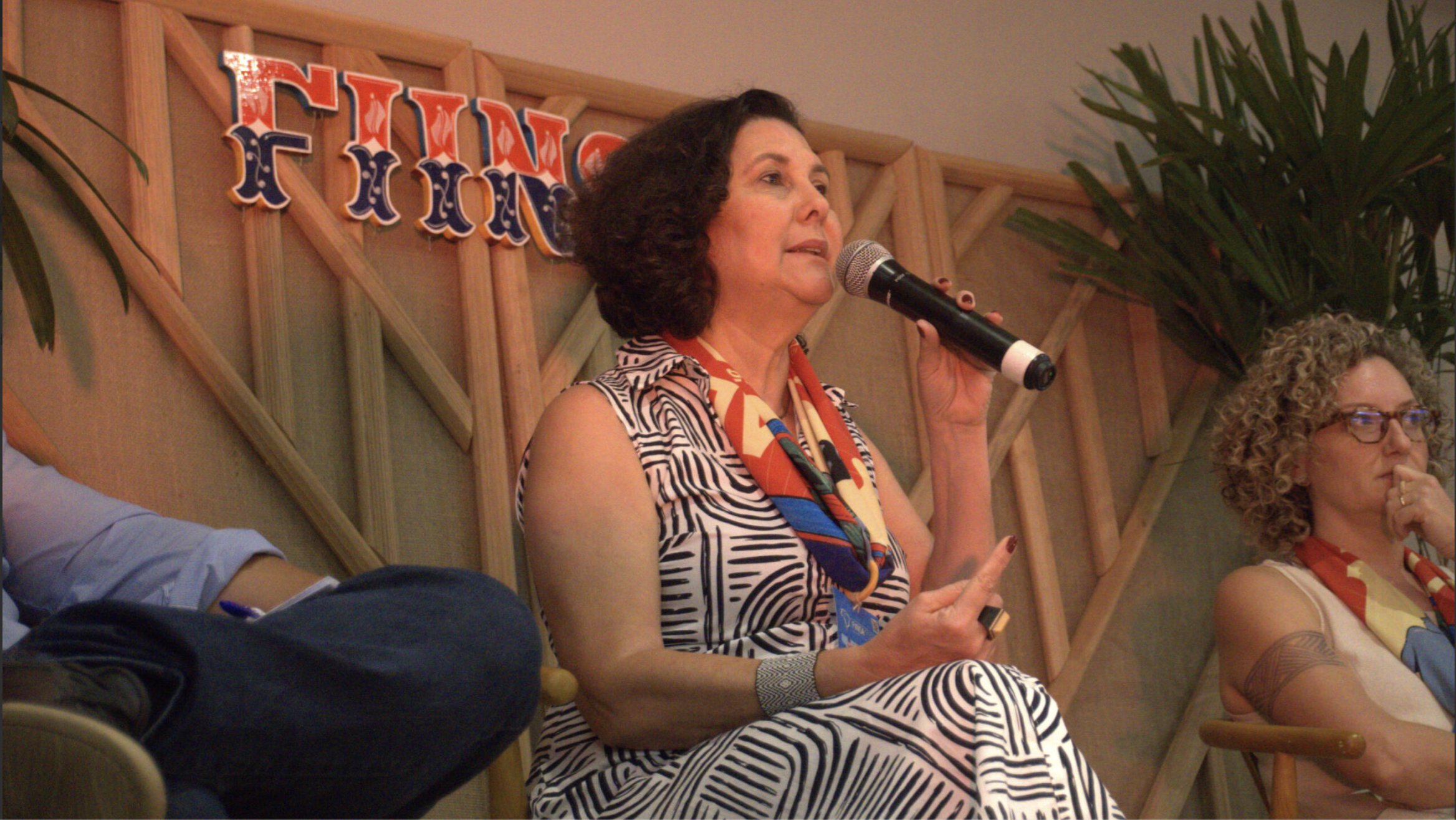
On November 10, the Amazon Impact Investing and Sustainable Business Festival (FIINSA) transformed Belém into one of COP30’s most strategic side events to discuss the Amazon Rainforest’s future. Organized by Idesam, Impact Hub and CESUPA, and sponsored by Fundo Vale, the event, which lasted from early morning until evening, brought together around 130 people, including entrepreneurs, investors, indigenous leaders, public managers, researchers and representatives of civil society in an environment of listening and collective construction.
According to Juliana Teres, co-founder of Impact Club Manaus, the COP30 FIINSA was based on the concept that action speaks louder than words. “Amid so many important discussions, we want to highlight real action and the implementation of solutions. It’s not just about ideas or promises, but about showing who is getting their hands dirty, how this is happening, and what results we are already seeing in the forest and in local communities,” she said.
One of the highlights of the event’s diverse schedule was a panel discussion called “Capital That Leverages Impact: How to Guarantee Real Results,” moderated by Carlos Gabriel Cury, Idesam’s bioeconomy innovation director. The speakers were Márcia Soares, Fundo Vale’s Amazon and partnerships manager; Paulo Monteiro, a member of Assobio’s executive board; Bemol director Denis Minev; Flávio Soares Baré, financial director of the Podáali Fund; and Melissa Sandic, representative of the CLUA philanthropic alliance.
The conversation brought together complementary experiences in philanthropic investing, private capital, indigenous funds and international alliances, highlighting that the region’s economic transformation depends on the combination of multiple actors and financial arrangements aligned with local reality.
At the start of the panel, Paulo Monteiro shared the perspective of someone who feels firsthand the challenges of building impact businesses in the region. He pointed out that investments to support Amazonian initiatives are still scarce, given the region’s complexity. He also drew attention to the need to invest not only in companies, but in the entire ecosystem, including legal services, R&D laboratories, logistics, skilled labor and networks with universities and researchers. In his view, a healthy ecosystem is one in which entrepreneurs can make mistakes without those mistakes meaning the death of their business.
The panel highlighted the experiences of philanthropic and impact funds that have adapted to the Amazon’s specific conditions. Márcia Soares reported on Fundo Vale’s transition from more traditional philanthropy to activities aimed at developing a sustainable economy, recognizing that ready-made models imported from other locations, such as traditional venture capital structures, do not automatically work in the region.
“The Amazon is very diverse, so you can’t just copy and paste what is done in São Paulo’s financial district. We need mechanisms and instruments tailored to this reality. Fundo Vale seeks to understand the diversity of impact businesses in the region and their needs at each stage in order to create more viable arrangements for different types of enterprises,” she said.
Soares explained how Fundo Vale has been using flexible philanthropic capital as a testing and leverage tool, either as seed capital or as collateral to unlock larger resources. She mentioned the case of Belterra, which accessed R$100 million in financing from the Brazilian Development Bank (BNDES) with Fundo Vale’s support. She also noted schemes to strengthen cooperatives and associations and help them access credit lines, such as the National Program to Strengthen Family Farming (Pronaf).
On the same subject of cooperation and complementarity, Melissa Sandic presented the Climate and Land Use Alliance (CLUA), which brings together six international foundations around the Amazon. She explained that the initiative arose from the recognition that the region’s complexity requires collaborative arrangements of intelligence and resources. She stressed the importance of discussing agendas – such as climate goals, habitat conservation and bioeconomy strengthening – while seeking a clearer orchestration of the roles of each stakeholder and the construction of collective solutions to maximize the contribution of each organization.
Denis Minev, the climate conference’s special envoy for the private sector in the Amazon, reinforced the central role of entrepreneurs in building prosperous societies. He highlighted COP30 as an opportunity to “broaden circles” and strengthen sustainable businesses, taking advantage of instruments such as climate finance and carbon initiatives. In his speech, he pointed to the recovery of degraded areas, carbon storage and food production as concrete areas where investments are already beginning to lead to jobs and income across the region.
An essential counterpoint to traditional funding logic came from Flávio Soares Baré of the Podáali Fund, an Amazonian indigenous fund managed 100% by indigenous people. He explained that the fund was created five years ago out of the indigenous movement’s dream and need to build its own support mechanisms, which are less bureaucratic and closer to local reality.
Its governance is composed of indigenous leaders representing different regions, ensuring that guidelines come from the grassroots and not from ready-made projects imposed from outside.
According to Baré, when a resource arrives mediated by this logic, the impact is not only financial: often, the contribution helps to reactivate traditions and knowledge that had been lost in time, showing that investing in indigenous peoples also means investing in the recovery of cultural aspects fundamental to forest conservation and local resilience.
From the Forest to the World: COP30 FIINSA action letter
A letter titled “From the Amazon to the World: A Post-COP30 FIINSA Action Letter” was collectively drafted during the festival, based on contributions gathered during debates, panels and roundtable discussions. The document brings together diagnoses, proposals and solutions that position the Amazon as the protagonist of a new inclusive, innovative and regenerative economy, harnessing the wisdom of those who keep the forest alive.
“The letter represents a collective call for a new pact for the Amazon. It was born from listening to and learning from those who live and work in the forest, translating what is already happening on a local level into concrete proposals. It is a message to the world: we need investments committed to nature’s time, policies that recognize the value of local knowledge and partnerships that respect the region’s diversity. A sustainable future will not be built from the outside in: it starts here, with the voices and solutions of the Amazon itself,” said Marcus Bessa, co-founder of Impact Hub Manaus and one of FIINSA’s organizers.
About FIINSA
Organized by Idesam and Impact Hub Manaus, sponsored by Fundo Vale and supported by a broad network of partners, FIINSA has become established since 2018 as a forum for connecting those who create, those who invest and those who believe in the power of the standing forest.
In addition to intense debates, the festival included the Amazon Market – a fair featuring social and biological diversity products, including handicrafts, food and cosmetics extracted from the forest. There were also spaces for socializing and networking, cultural and gastronomic experiences celebrating Pará’s identity, and immersive performances inspired by nature.