
The event brought together governments, development banks, financial institutions, the private sector and international organizations to discuss mechanisms capable of increasing investment in rural areas across Latin America and the Caribbean.
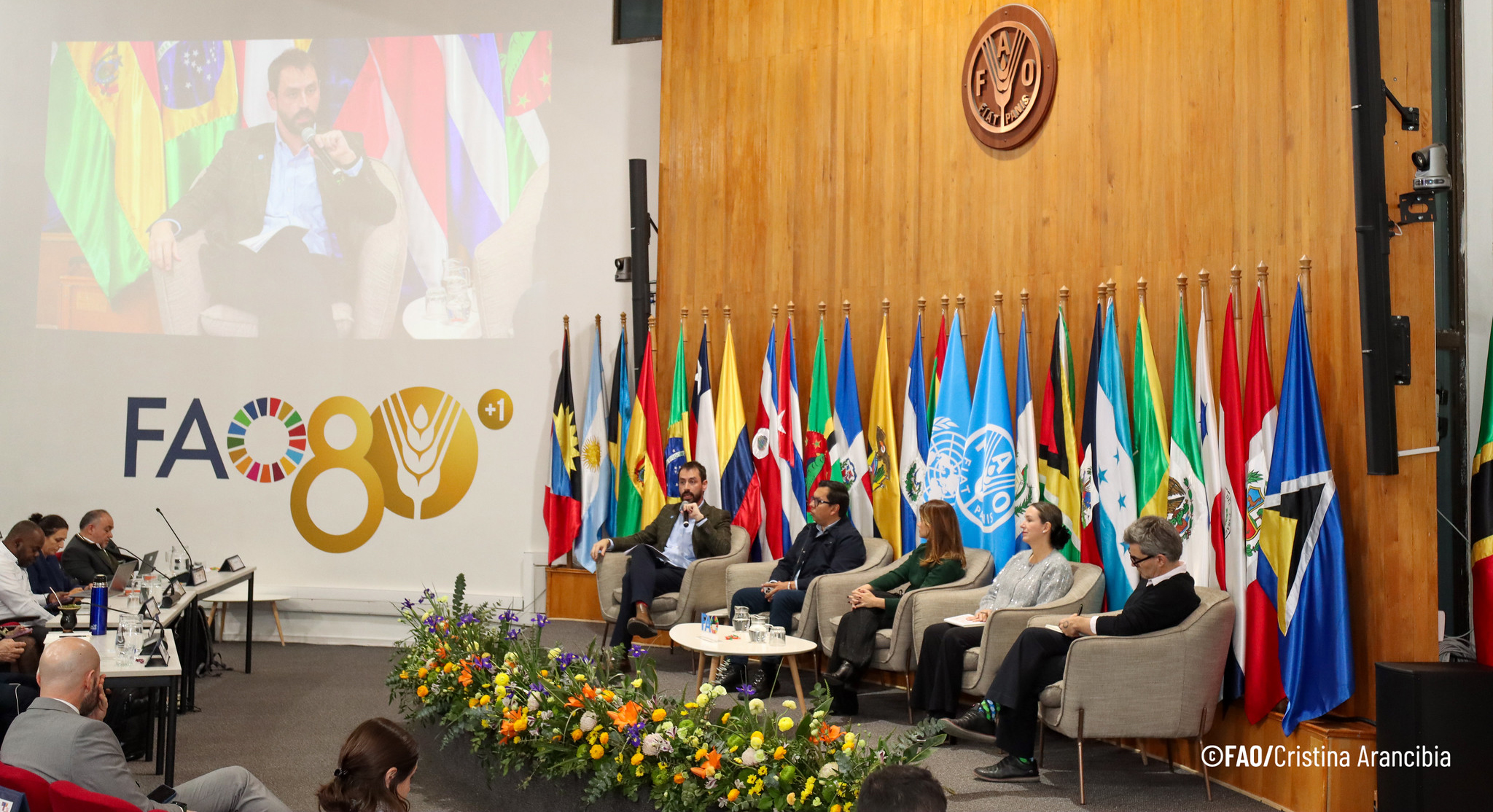
The transition to sustainable food systems depends on a range of factors, such as fair access to markets and adequate financing. Without credit that is compatible with agricultural cycles, guarantees suited to producers’ realities and instruments capable of absorbing climate risks, projects remain vulnerable. It was in response to this challenge that the United Nations Food and Agriculture Organization (FAO) held the “Investing in Agrifood Systems in Latin America and the Caribbean” event in Santiago, Chile, on August 18 and 19.
Held in a hybrid format, the meeting fostered high-level dialogue on how to expand and improve investments aimed at transforming agrifood systems. The agenda brought together governments, regional integration mechanisms, international cooperation agencies, national and regional development banks, financial institutions, civil society, the private sector and multilateral organizations. The goal was to develop a broader approach capable of connecting financial inclusion and resilience in rural areas.
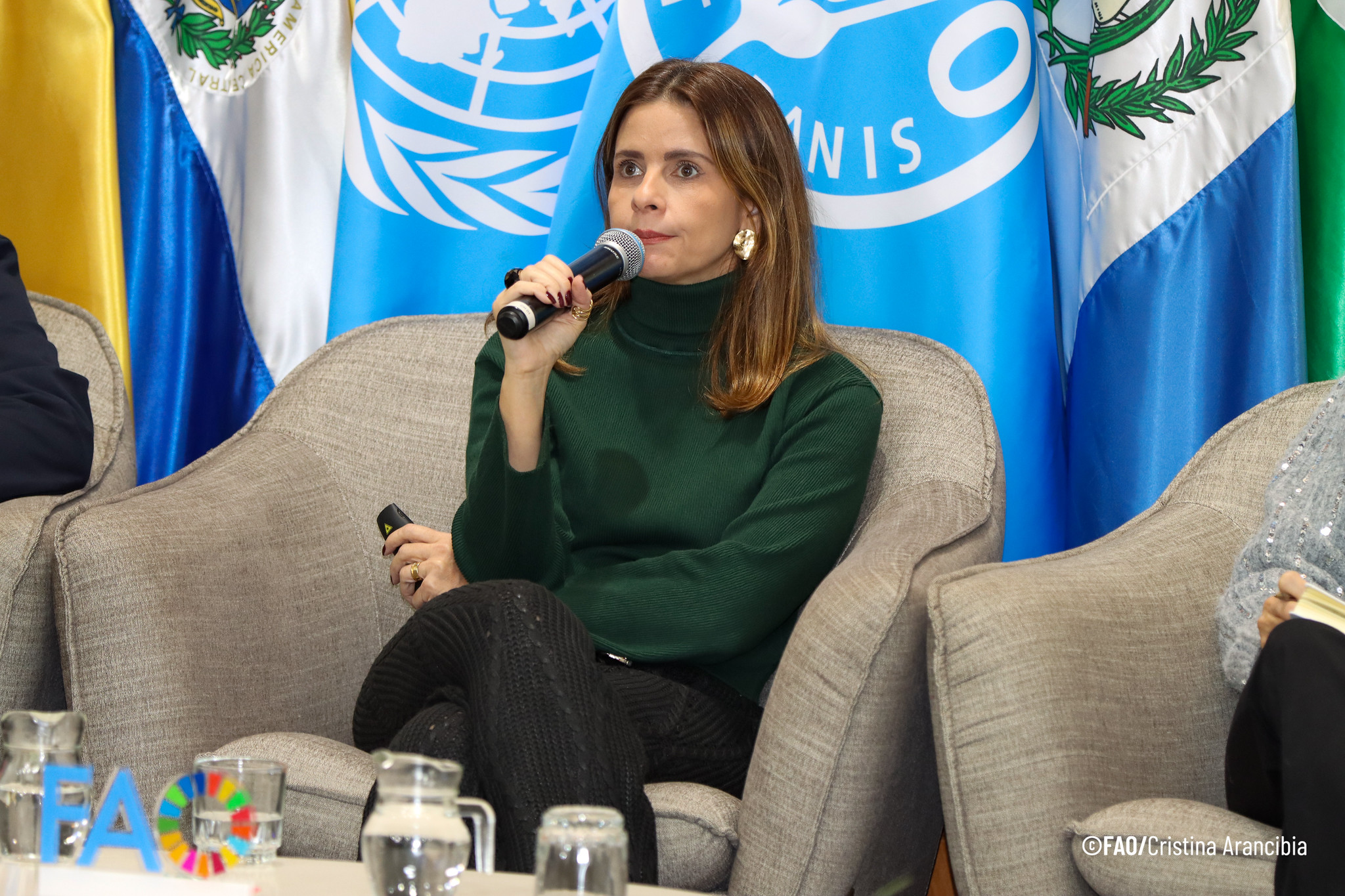
In this context, the panel “The Critical Role of the Private Sector, Commercial Banks and Impact Funds in Strengthening the Resilience of Agrifood Systems” featured Mariana Escobar of the International Finance Corporation, Juliana Vilhena of Fundo Vale, Leonardo Cubillos of BBVA, Daniel Brandão of Vox Capital, Andrés Felipe Herreño and Anass Khallouqi of FAO and Pilar Jiménez of the Sustainable Trade Initiative. The discussion addressed ways to help close funding gaps in rural agrifood systems, highlighting instruments such as value chain financing, green credit, impact investment, insurance, guarantees and patient capital, as well as the conditions needed to expand private sector participation and strengthen resilience in rural areas.
A strategic but underfunded region
Latin America and the Caribbean play a central role in global food production and offer significant opportunities for sustainable development, but the region’s agrifood systems still receive less than 10% of global financing for the sector. The available resources are not only insufficient but also remain fragmented and do not always reach family farmers, small businesses, cooperatives and rural communities that most need to invest in climate adaptation, innovation and increased productivity.
FAO therefore proposes a shift in perspective. Creating new lines of credit is not enough; it is necessary to build financial ecosystems tailored to local conditions, with differentiated pathways for inclusion, financing and investment that take into account the economic, social, environmental and climate characteristics of each region.
From microfinance to building ecosystems
The discussion highlighted the need to adapt financial products to agricultural cycles, the informal nature of some agricultural activities, the lack of traditional collateral and the climate vulnerability of rural areas. In this context, financial inclusion is not limited to opening bank accounts or offering microcredit. It involves building relationships based on trust, providing technical assistance and financial education, and developing products that are compatible with the income flows of each activity.
The event also included a discussion of a community kitchen project in Peru called Ollas Comunes (Shared Pots). It was presented as an example of an initiative with high social and community value of a type that often does not fit traditional financing models. The discussion sought to stimulate new ideas and instruments to support activities that generate collective impact, even when they do not have the conventional characteristics of a bankable business.
Cooperatives and micro, small and medium-sized enterprises as pathways to credit
Another focus of the meeting was strengthening the organizational capacities of cooperatives, associations, micro, small and medium-sized enterprises and producer organizations.
Collective organization can increase bargaining power, pool demand, reduce transaction costs and improve access to different financial instruments. It can also help transform dispersed production units, often with limited management capacity, into structures better prepared to engage with banks, investors and buyers.
In this process, establishing formal structures is a means rather than an end. Beyond meeting bureaucratic requirements, stronger rural organizations can structure projects, demonstrate repayment capacity, access technical assistance and direct investments toward more resilient agrifood systems.
The strategic role of development banks
National development banks were presented as key stakeholders in overcoming the fragmentation of rural funding. The instruments discussed included specialized credit lines, second-tier funds, guarantees, technical assistance, concessional financing, green financial products, insurance, digital solutions and co-financing mechanisms.
The work of these institutions can be decisive in reducing risks and attracting commercial banks, cooperatives, international financial institutions and climate funds. Rather than operating in isolation, different actors can share risks, combine resources and create conditions for projects with economic, social and environmental impact to become financeable.
Regions prepared to attract investment
On the second day, the event looked at strengthening inclusive financial ecosystems and expanding the participation of the private sector, commercial banks and impact funds.
FAO presented cases from the Caribbean, Central America’s Dry Corridor and the Amazon, all related to its Mão na Mão (Hand in Hand) initiative. These experiences demonstrate that a location’s ability to attract investment depends on factors that go far beyond the existence of a financial instrument.
Reliable information, strategic planning, clarity about demand, risk identification, governance and a well-structured project pipeline are essential elements for turning productive potential into an investment opportunity.
Private capital and impact finance
The private sector, commercial banks and impact funds were also at the center of the debates. The participants discussed value chain financing, green loans, impact investments, insurance, guarantees and patient capital—resources with longer return horizons and greater tolerance for the specific characteristics of certain businesses, such as long payback periods and difficulty in providing collateral.
Expanding private sector participation requires reducing perceived risk. This calls for high-quality information, demand aggregation, sustainability standards, traceability, technical assistance and partnerships with public authorities and multilateral institutions.
Beyond direct loans or investments, the business sector can contribute through more robust supply contracts and scheduled purchases. It can also provide management support and technical assistance to strengthen production chains and expand small producers’ access to markets.
“This coordination is particularly important in areas where income is seasonal, infrastructure is limited and climate impacts increase uncertainty around production. Support needs to be designed not only to address an immediate need but also to sustain long-term transformation,” said Juliana Vilhena, Fundo Vale’s strategy, management and impact manager, who attended the event.
Blended finance and the role of catalytic capital as a tool for transformation
Mobilizing climate resources was another key focus of the meeting. FAO highlighted the need to combine public, private and concessional capital through innovative mechanisms such as carbon markets, blended finance and guarantees.
“One of the key messages from the discussion was that addressing climate, biodiversity and rural development challenges requires a true “continuum of capital,” in which different sources of funding and financial instruments work in a complementary manner throughout the business journey. In this context, catalytic capital instruments, such as first-loss mechanisms, guarantees and risk-sharing arrangements, can play a key role in reducing barriers, unlocking financing and attracting new investors to sectors that are essential to the transition toward a more resilient and regenerative economy,” summed up Juliana Vilhena.
Vale’s 2030 Forest Goal is an example of a private sector initiative of this kind. It includes support for businesses that integrate land restoration and income generation through biodiverse agroforestry systems, diversified forestry and simplified intercropping systems, in partnership with family farmers and local organizations. To enable restoration at scale, the strategy combines financial support (through catalytic capital and the structuring of blended finance mechanism) with nonfinancial support (through technical assistance, training, market access and stronger management and governance).