
Fundo Vale’s participation in Brazilian Biodiversity Genomics Consortium event underscored the importance of integrating genomics, traditional knowledge and fair inclusion into sustainable production chains
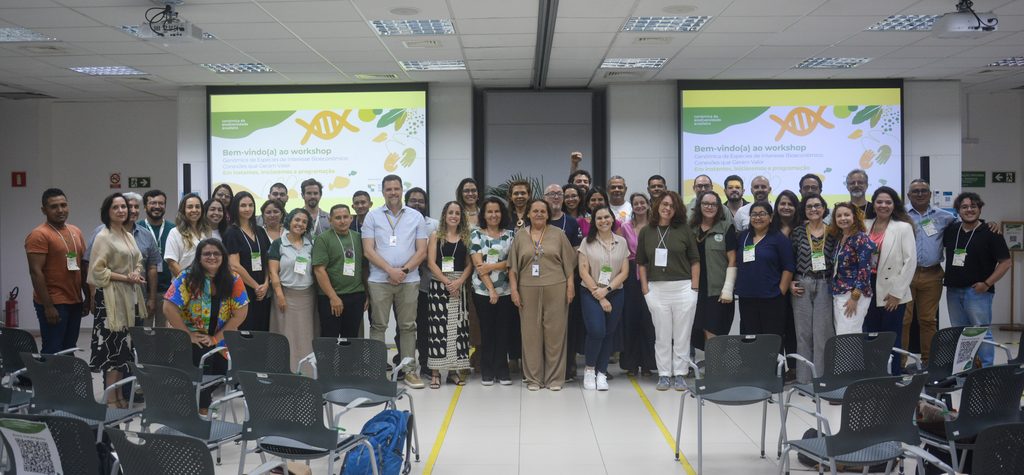
Knowing, protecting and valuing biodiversity are essential steps toward strengthening sustainable production chains and promoting the social bioeconomy. This was the central theme of the workshop “Genomics of Species of Bioeconomic Interest: Connections That Generate Value,” held from August 4 to 6 at the Vale Institute of Technology (ITV), in partnership with the Chico Mendes Institute for Biodiversity Conservation (ICMBio), in Belém, Pará.
Held as part of the Brazilian Biodiversity Genomics Consortium, a partnership between ITV and ICMBio, the event aimed to integrate technical and scientific knowledge, traditional know-how, production chains and regulatory frameworks, as well as contributing to the development of strategies and tools for the sustainable use of species of bioeconomic interest.
Over the course of three days, around 60 participants—including ITV researchers and scholarship holders, ICMBio staff, employees from Brazil’s environmental protection agency (IBAMA) and Fundo Vale representatives—discussed how genomics can support the conservation and development of fairer and more sustainable production chains.
Science connected to local realities
As well as sharing technical content, the workshop fostered dialogue among researchers, public sector managers, companies and communities. The aim was to recognize that solutions for the social bioeconomy depend not only on new technologies or scientific information but also on listening to local communities, valuing traditional knowledge and building fairer and more sustainable production chains.
The topics discussed included pirarucu fish and açaí berry production chains in protected areas in the Amazon under the Sustenta.Bio Program, a partnership between Fundo Vale and ICMBio. This initiative supports economic activities in extractive and riverside communities, combining nature conservation with a strategy that includes strengthening community-based production systems, facilitating fair market access, providing training and technical assistance, mobilizing investment and financing, and developing infrastructure and innovation.
The second day included a presentation on the ECOSociobio Program—a public policy inspired by the Sustenta.Bio experience that seeks to apply the same approach to other federal protected areas based on an assessment of their suitability. In all, Brazil has 347 federal protected areas covering 171.8 million hectares and home to around 100,000 families belonging to traditional peoples and communities.
As a next step, the participants began jointly drafting a charter of principles to guide projects involving species of bioeconomic interest and interactions with communities.
“Generating value from biodiversity means more than turning species with genetic value into products. It means producing scientific knowledge, valuing the know-how of traditional communities, strengthening environmental conservation and creating opportunities for benefits to be developed and shared with the people who live and work in these areas,” said Patrícia Daros, Fundo Vale’s director and deputy director of ITV, who participated in the workshop.
“The charter of principles is an important step in cementing the Brazilian Biodiversity Genomics Consortium’s work on initiatives involving species of bioeconomic interest and communities, based on responsibility, respect and a long-term vision,” said Silvia Barreto, the consortium’s project management officer at ITV.
About the Brazilian Biodiversity Genomics Consortium
The Brazilian Biodiversity Genomics Consortium is a technical and scientific partnership between ITV and ICMBio, established in 2022, that uses genomic tools to expand knowledge about Brazil’s biodiversity and support its conservation. The project combines different approaches, such as whole-genome sequencing, analysis of the genetic diversity of populations and the study of environmental DNA—genetic material found in samples of water, soil or other environments.
As the agency responsible for managing public conservation policies in Brazil, ICMBio defines the lists of priority species. It focuses on directing data to support national action plans for threatened species, the National Biodiversity Monitoring Program and efforts to combat invasive alien species.
Based in Belém, Pará, ITV provides cutting-edge laboratory infrastructure, a team of researchers with expertise in omics sciences and financial resources. The institute is a pioneer in generating thousands of genetic markers and sequencing whole genomes in the Amazon, providing the scale required for the project. As of June 2026, the consortium had studied 837 species, conducted 1,983 sequencing procedures and brought together 434 collaborating researchers from 145 institutions in Brazil and abroad.