
Program included technical discussions, exchange of field experiences, and the launch of the 1st edition of the Agroforestry Report produced by Studies and Innovation Center, which aims to accelerate the expansion of agroforestry systems through the dissemination of knowledge.
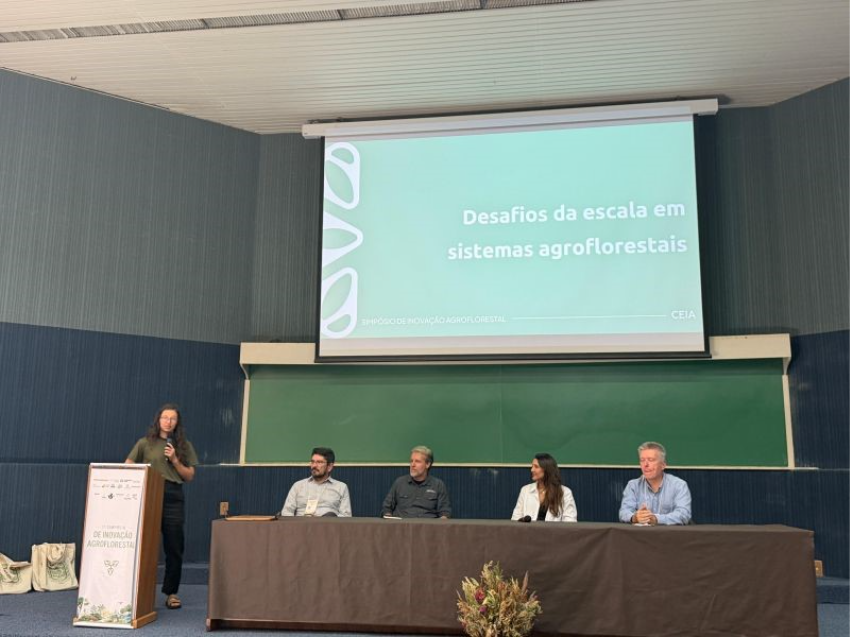
On May 6, Fundo Vale sustainability analysts Paula Mota and Priscilla Queiroz participated in the first Agroforestry Innovation Symposium, held in Piracicaba by the Agroforestry Studies and Innovation Center (CEIA) at the Luiz de Queiroz College of Agriculture, part of the University of São Paulo. Focused on science and practical experience, the symposium promoted discussions on challenges and opportunities for scaling up agroforestry systems while ensuring economic viability and regenerative impact.
Paula Mota participated as a panelist, sharing how private initiatives can strengthen and advance the country’s agroforestry agenda, particularly through the experiences of Vale’s 2030 Forest Goal, an innovative initiative which includes the restoration of areas through agroforestry systems and other sustainable models as part of its strategy. The presence of corporate actors such as Heineken and Fundo Vale itself highlighted the private sector’s growing engagement in nature-based solutions and sustainable development strategies.
“We had the opportunity to follow discussions featuring leading names from the academic and scientific community, such as Professor Carlos Cerri of the Luiz de Queiroz College of Agriculture and researcher Rachel Creamer from Wageningen University, and researchers from Embrapa. We also heard from researchers at Embrapa and representatives of organizations that have been advancing agroforestry in practice, such as Belterra, Rizoma and Courageous Land. Throughout the day, the importance of agroforestry systems as a strategy capable of combining food production, environmental conservation and climate resilience became even more evident,” Mota said.
“We had the opportunity to participate in discussions with important figures from the academic and scientific fields, such as Professor Carlos Cerri from Esalq, researcher Rachel Creamer from Wageningen University, and researchers from Embrapa. Furthermore, there was a rich exchange of experiences with representatives from organizations that have been promoting agroforestry in practice, such as Belterra, Rizoma, and Courageous Land, as well as producers who presented their case studies. Throughout the day, the importance of agroforestry systems as a strategy capable of combining food production, environmental conservation and climate resilience became even more evident,” Mota said.
Supported by Fundo Vale, the symposium also marked the launch of the 1st edition of CEIA’s Agroforestry Report, which presents an updated overview and innovations in agroforestry systems, as well as highlighting how Brazil has been a leader in this sustainable food production model. Reports like this contribute to the dissemination of knowledge and promote the construction of more resilient, sustainable, and evidence-based production systems. Access it here!