
Businesses supported through Vale’s 2030 Forest Goal, via Fundo Vale, showed how agroforestry and silvopastoral systems, forest conservation through REDD+, forest restoration and carbon credit generation can be scaled up
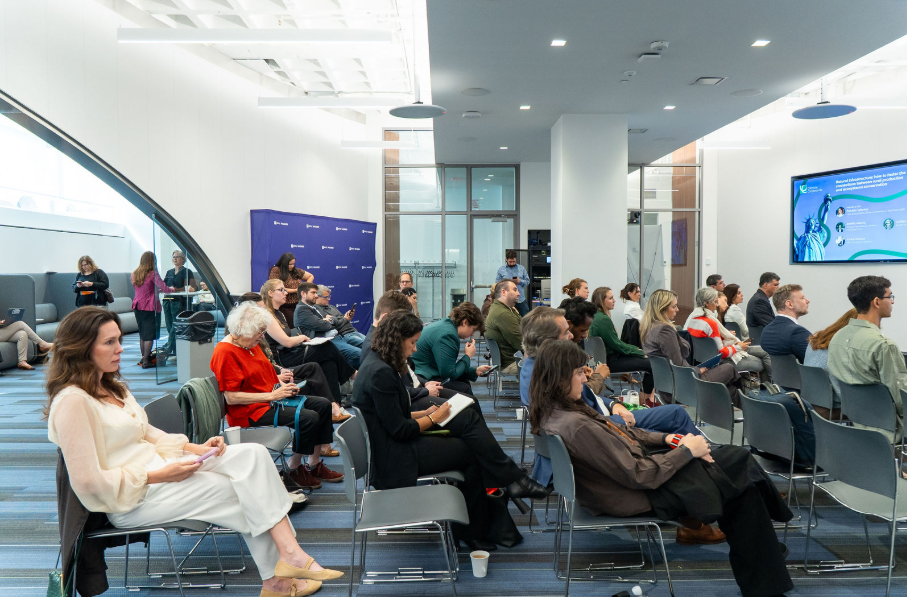
During New York Climate Week, Fundo Vale presented its strategy for supporting nature-based solutions initiatives at the “Land Use Models for Carbon Emissions Mitigation” panel, curated by the Arandu Institute and held as part of the 2026 Climate Crossroads Forum.
Bringing together experiences focused on scaling up the restoration of degraded areas through silvopastoral and agroforestry systems, REDD+ conservation, forest restoration and carbon credit generation, the “Land Use Models for Carbon Emissions Mitigation” panel showcased viable pathways for reconciling climate action, biodiversity conservation and income generation.
The experiences presented are aligned with Vale’s 2030 Forest Goal, a voluntary commitment to protect and restore 500,000 hectares beyond the company’s legal obligations and operational boundaries. To date, Vale has achieved approximately 45% of the goal, with around 225,000 hectares protected and restored.
Between 2020 and 2025, Fundo Vale allocated R$292 million in direct investments and R$38 million in nonfinancial support to land restoration businesses. This support contributed to the implementation of approximately 25,300 hectares using agroforestry and silvopastoral systems, simplified intercropping, diversified forestry and assisted natural regeneration.
“Financing restoration at scale remains a global challenge because these initiatives require more time to mature and generate financial returns. By transforming philanthropic resources into catalytic, patient and flexible capital, we reduce initial risks and help attract investment from other sources,” said Rodrigo Lauria, Fundo Vale’s executive director.
Solutions for mitigating emissions from land use and agriculture
Caaporã Agrossilvipastoril, one of the first businesses incubated by Fundo Vale in the context of the Forest Goal, shared its experience with silvopastoral systems. The company manages approximately 19,000 hectares, including around 9,000 hectares of restored degraded pastureland in Mato Grosso, Tocantins and Bahia.
The model combines regenerative agriculture practices, improved pasture quality and tree planting. In addition to increasing productivity, the system contributes to animal welfare and reduces methane emissions intensity per unit of meat produced.
CarbonPec, a Caaporã spin-off, presented its strategy for turning emissions reductions in livestock production into financial incentives for farmers. The initiative seeks to generate enough carbon credit revenue to cover between 50% and 80% of the cost of restoring pastures and adopting regenerative practices.
In partnership with Imaflora, the company is supporting the development of a methodology under Verra’s VCS standard. The pilot project, tested on Caaporã farms in northern Tocantins, has already accounted for more than 25,000 metric tons of CO₂ equivalent in emissions reductions.
In turn, BTG Pactual Timberland Investment Group presented progress on its US$1.24 billion fund for conservation, restoration and reforestation in Latin America. The initiative plans to operate across around 270,000 hectares of degraded landscapes, divided between the protection and restoration of native ecosystems and sustainable commercial forestry certified by the FSC.
So far, more than 20,000 hectares of native ecosystems have entered active restoration and 29 million trees have been planted. Fundo Vale supported the restoration of 10,000 hectares, which are counted toward Vale’s 2030 Forest Goal.
Courageous Land highlighted its agroforestry intelligence platform, launched in 2024 with support from Fundo Vale. This technology uses georeferenced data to identify species and crops suited to each property, estimate costs and revenues, and project the potential for generating carbon credits.
The platform currently has approximately 1,000 registered properties, representing 400,000 hectares for the implementation of agroforestry systems. The initiative won the Innovate for Nature (I4N) award at the 2026 World Economic Forum in Davos.
ZEG Florestal presented its REDD+ project in Roraima, which protects more than 14,000 hectares of native Amazon Rainforest in an area under intense pressure from agricultural expansion. The initiative combines satellite monitoring, forest fire prevention and response, biodiversity conservation and socioeconomic benefits for local communities. The project received an AA rating from BeZero Carbon, the highest rating awarded by the international carbon credit rating agency. It was the first avoided deforestation project in the world to receive this distinction.
With support from Fundo Vale, ZEG also developed a Brazil nut harvesting initiative with communities surrounding the protected area. The work included establishing an association of Brazil nut collectors, investments in infrastructure and equipment and support for commercialization, strengthening income generation and the value of preserved forests.
The Arandu Institute, which also participated in the event, was responsible for managing and monitoring the allocation of Fundo Vale resources to four of the presented initiatives: investment through a Rural Product Note in Caaporã, support for Courageous Land, acceleration of CarbonPec and a grant for ZEG Florestal’s REDD+ project. Through this work, the institute connected philanthropic and private capital with four of the initiatives featured on the panel.