
Held by Latimpacto in Manaus, Impact Minds 2026 brought together leaders from 40 countries; Fundo Vale, one of the sponsors, shared its experiences in developing solutions aligned with local realities and working through networks and coalitions
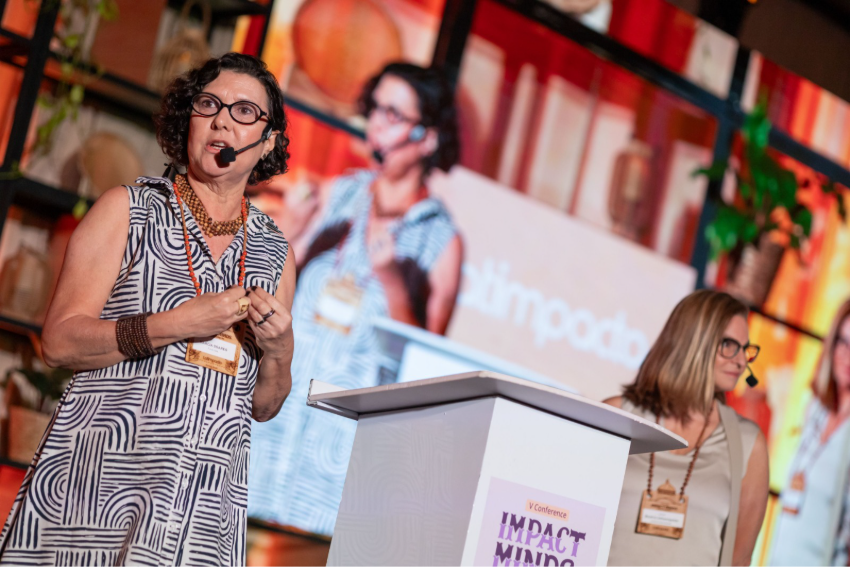
From September 8 to 11, Manaus hosted Impact Minds, Latimpacto’s annual conference, which this year had the theme of “Connecting Us.” Latimpacto is a global organization that brings together multisector leaders to mobilize human, intellectual and financial capital flows to drive social and environmental impact in Latin America and the Caribbean. Fundo Vale participated in the creation of the network, is one of its founding members and plays a role in its governance through its Management Council. Its contributions include supporting nature and bioeconomy agendas in the Amazon and strengthening the network in Brazil.
The fifth edition of the global conference was structured around four pillars: connecting intentions, promoting alignment around purposes and strategies; connecting capital, expanding the combined use of different financial instruments; connecting stakeholders, fostering collaboration across sectors, regions and communities; and connecting systems, focusing on structural changes capable of generating lasting impact.
Building futures
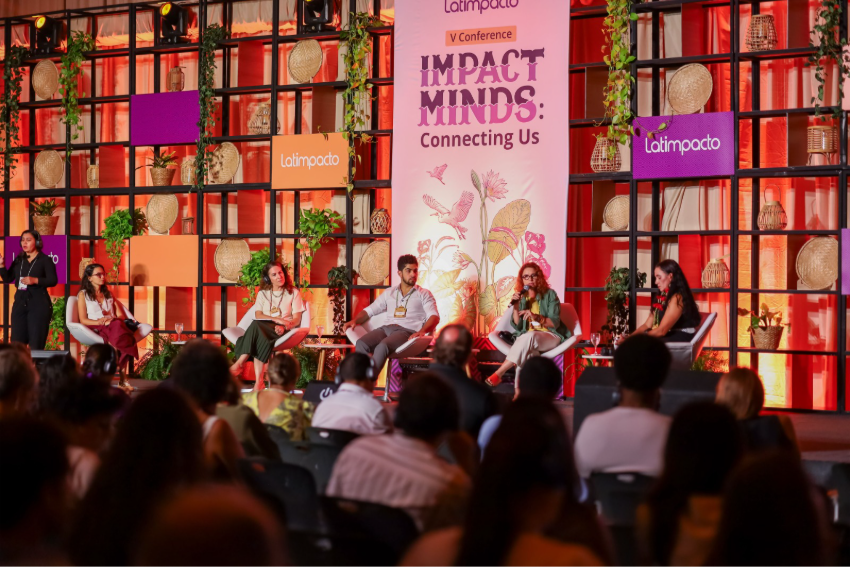
The “Building Futures” panel focused on a central issue: decisions about development, conservation and prosperity are still often made far from the regions and communities that directly experience their consequences. The participants were Fundo Vale director Patrícia Daros; Daniela Konietzko, president of the WWB Colombia Foundation; Wallace Ribeiro, impact and community relations manager at Ambev; and Rose Meire Barbosa Correa, deputy director of the Brazilian Amazon Indigenous Fund (Podáali).
“Sustainability is the only possible path for the future, and this paradigm shift must be collective. When different perspectives are part of the same conversation, decisions are fairer and more effective. Science helps us understand risks and create solutions, governments develop public policies, civil society organizations have knowledge and experience in specific areas, the private sector contributes financial and technical resources to enable the transition, but it is the voice of communities that shows what is necessary and legitimate for each region,” argued Patrícia Daros.
Capital that respects local realities
Financing solutions in alignment with the specific needs of communities was also discussed in the panel “Capital That Respects Local Realities—Financing with Autonomy for Communities.” The conversation brought together Márcia Soares, Fundo Vale’s Amazon and partnerships manager; Bruno Girardi, vice president and director of Sitawi Finanças do Bem; Laura Santa, senior climate finance associate at the Latin American think tank Transforma; and Fabio Muller, executive director of Brazil’s Integrated Center for Sustainable Development Studies and Programs (CIEDS).
“Financing projects is important but turning investment into long-term social and environmental impact requires combining resources, capabilities, relationships and knowledge. When we strengthen initiatives, organizations, associations, cooperatives and leaders, we increase the capacity of regions to respond more effectively to economic, social and climate challenges. Support does not end when a project ends because the capabilities developed, networks built and structures strengthened remain,” said Márcia Soares.
Strengthening impact ecosystems
The role of networks, coalitions and ecosystem enablers was the focus of a dialogue moderated by Liz Lacerda of Fundo Vale, featuring Gabriela Brettas of Move Social and Helena Fischer of Sense-Lab, who presented the study “Multi-Stakeholder Initiatives for the Development of Impact Ecosystems,” conducted with funding from Fundo Vale, the Arapyaú Institute, the Boticário Group Foundation and the Sabin Institute.
Drawing on practical experiences and lessons identified in the study, the panel explored how networks and coalitions can go beyond jointly implementing projects and help shape the ecosystem itself by strengthening relationships and mobilizing capital to fill gaps and create the conditions for the impact agenda to move forward in a more coordinated and systemic way.
“These initiatives stand out because they bring together multiple stakeholders with the explicit purpose of intentionally strengthening the elements and relationships that make up a thematic or regional ecosystem, connecting organizations, sectors, resources and fields of action,” said Liz Lacerda.
Culture as a driver of capital
Luciana Gondim, director of the Vale Cultural Institute, and Mayra Mosquera Ramírez, coordinator of Latimpacto’s Culture Fund, took part in a conversation about the still-underestimated potential of art and culture as assets for social transformation. The panel explored experiences of cultural funds that have generated large-scale impact in Colombia and reflected on how cultural investment can mobilize people, broaden narratives and drive lasting change.