
Organized by Din4mo, the event also marked the launch of a study on the fund and lessons learned about expanding financing for social and environmental impact initiatives
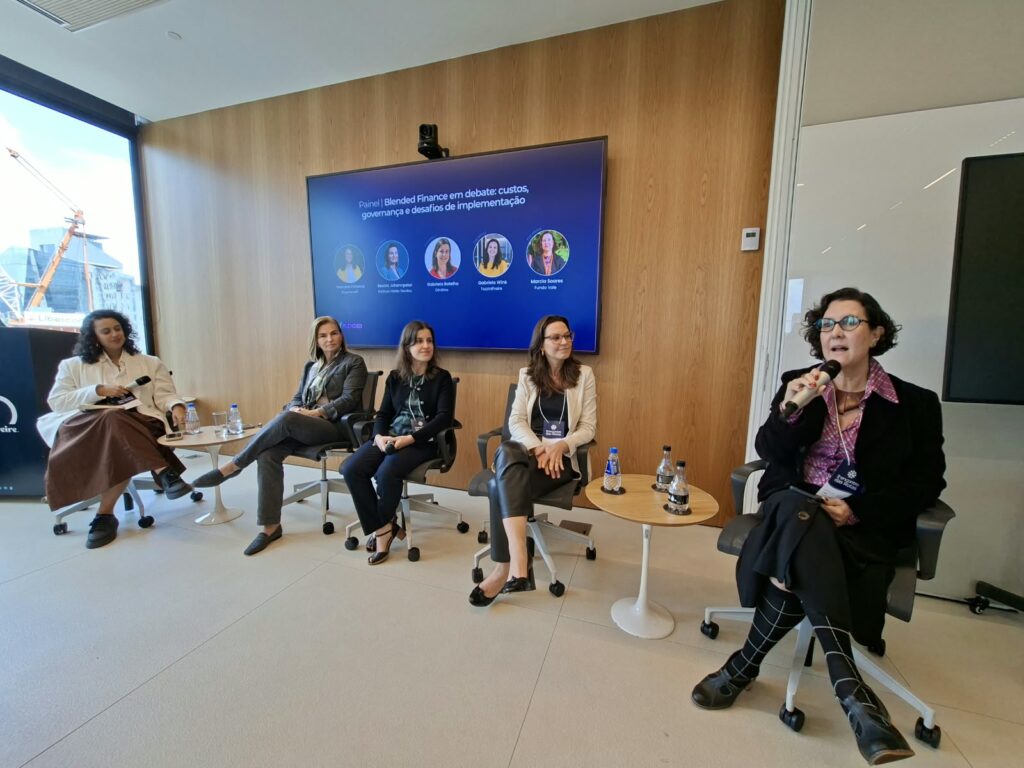
The Banzeiro Fund: Strategic Capital for Impact was launched at the third Go!Blended Journey Routes Meeting on October 20. The fund aims to use philanthropic resources strategically to mobilize market capital to finance social and environmental impact businesses. Developed by Fundo Vale in partnership with Din4mo, the fund was conceived as a laboratory for testing different blended finance structures to mobilize impact capital for forest conservation and climate initiatives, prioritizing the Amazon.
The initiative seeks to address a funding gap: many social and environmental businesses need resources and support to mature but cannot find financing conditions suited to their risks, timelines and revenue models. In this context, catalytic capital can help reduce risks, strengthen capabilities and attract additional sources of capital.
The Banzeiro Fund consists of catalytic capital, either repayable or non-repayable, to support organizations with a positive social and environmental impact through blended finance structures. Blended finance combines philanthropic, public and/or development finance capital to mobilize private commercial capital. Rather than investing directly in businesses and projects, the fund operates as a fund of funds, allocating resources to fund managers, funds or investment vehicles that finance these initiatives.
Fundo Vale initially serves as the catalytic capital provider, participating in origination and governance. Din4mo is responsible for structuring and operating the model and its support programs. The fund aims to mobilize R$3 in additional capital for every R$1 invested. Beyond financing, it will provide four integrated forms of support: technical assistance for organizational development, tailored financing, impact measurement and knowledge management.
This approach recognizes that providing financial resources alone is not enough to overcome the barriers these businesses face. The model complements Fundo Vale’s philanthropic activities and seeks to create the conditions needed for businesses to access other sources of capital and strengthen their long-term sustainability.
Study documents fund’s design and lessons learned
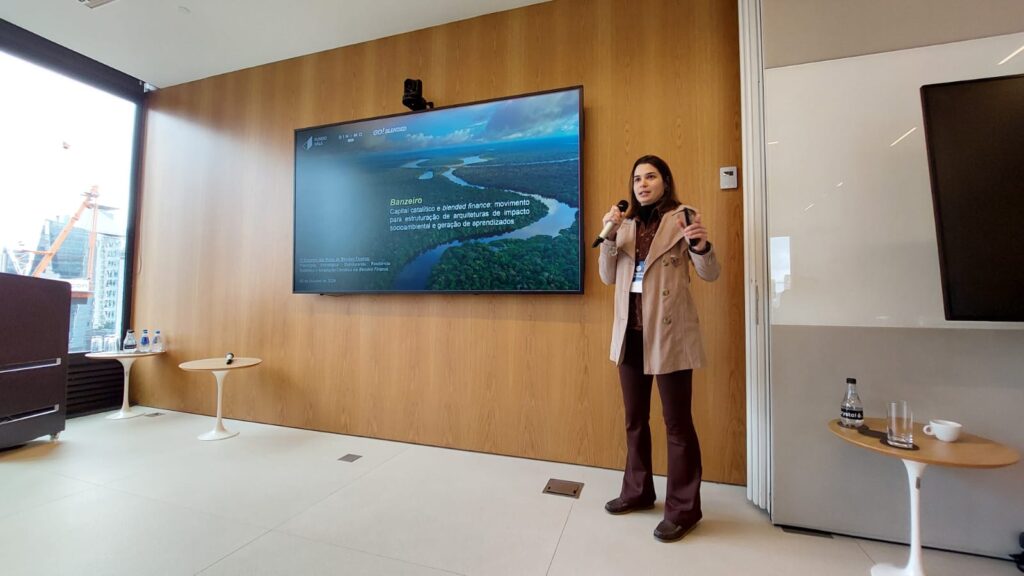
The event also marked the launch of the study “Banzeiro Fund—Catalytic Capital and Blended Finance: Lessons Learned in Structuring Social and Environmental Impact Financing Models.” The publication documents the decisions, challenges and lessons learned during the fund’s structuring and management, with the aim of generating useful and innovative knowledge for Brazil’s impact finance ecosystem.
The study is part of the Innovation Routes of the Go!Blended Journey, a community of practice led by Din4mo Lab to promote blended finance in Brazil. These routes draw on practical experience to develop benchmarks that can help other stakeholders create blended finance structures.
By documenting the Banzeiro Fund, the study presents a proof of concept, testing the practical feasibility of blended finance mechanisms for forest conservation, climate, the bioeconomy and land restoration, at the intersection of philanthropy and the market.
“More than structuring transactions, the goal is to help make blended finance increasingly practical for the market. Sharing evidence helps reduce the complexity of these arrangements, develop practical references and accelerate new initiatives,” says Patrícia Daros, director of Fundo Vale.
The publication explains how combining catalytic capital, specialized fund managers, nonfinancial support and impact measurement can help expand access to financing. Rather than simply presenting a model, the study seeks to highlight the decisions required to put it into practice and the elements that other institutions can adapt.
One of the publication’s central themes is additionality: catalytic capital should produce a change that would not occur without its participation. This means avoiding both subsidizing initiatives that could already access commercial financing on the same terms and supporting businesses without a plausible path to financial viability and impact generation.
The study also addresses the need to match financial instruments to the maturity of businesses, integrate impact considerations into decisions about how resources are used and map the legal and tax constraints affecting the organizations involved from the outset.
As the Banzeiro Fund is still being implemented, the publication distinguishes between hypotheses and expected results and evidence that still needs to be monitored. The aim is to share lessons transparently, including the model’s challenges, costs and limitations, helping future transactions be developed more efficiently.
For Fundo Vale, the expected legacy extends beyond the capital invested. Documenting this experience can provide guidance that other institutions can adapt to their own sectors and geographical contexts, helping mobilize more resources and making blended finance a more common practice in Brazil.
“Sharing this experience in structuring a venture philanthropy fund helps turn lessons learned into practical guidance that can reduce the costs of structuring blended finance mechanisms and strengthen cooperation among different stakeholders,” concludes Daros.