
Seasonal climate forecast bulletins from the Vale Institute of Technology highlight risks related to water availability and irregular rainfall, helping producers plan planting activities and manage agricultural and forest crops
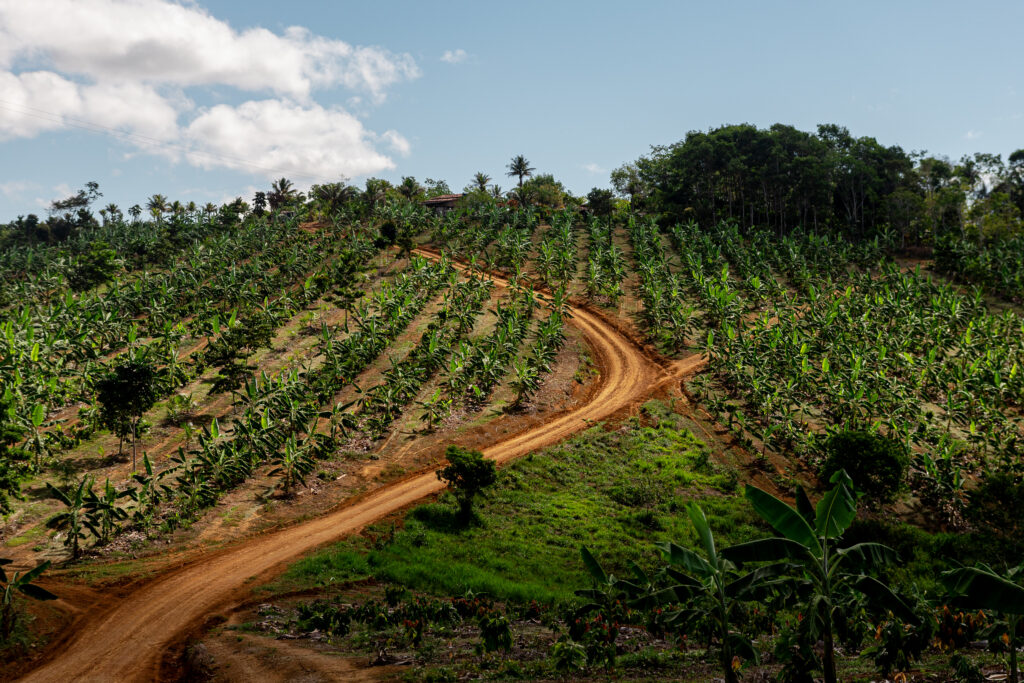
The Vale Institute of Technology (ITV), through its Social and Environmental Businesses Project, supported by Fundo Vale, produces seasonal climate forecast bulletins to support land restoration businesses as part of Vale’s 2030 Forest Goal, which establishes the company’s voluntary commitment to protect and restore 500,000 hectares beyond its operational boundaries by 2030. Based on statistical models, the bulletins provide rainfall and temperature forecasts, comparisons with previous periods and information on soil water storage.
The bulletins translate scientific knowledge into practical information to guide decision-making in the regions where these initiatives operate. They help identify the most favorable planting windows for crops of economic interest, inform irrigation management and support preventive climate risk management, enabling producers to take measures to adapt to unfavorable climatic conditions. This is an example of how knowledge generation can contribute to the implementation and continuity of agroforestry and silvopastoral systems supported by Fundo Vale.
The seasonal climate forecast bulletins for September, October and November 2026 presented projections for precipitation, temperature and soil water availability, while also taking into account possible effects associated with El Niño. The forecasts covered municipalities in four regions of Brazil where land restoration initiatives are being implemented. Here are some of the recommendations:
North region: Below-average rainfall is expected in most municipalities, with low soil water reserves across large areas and above-average temperatures in much of south-central Pará and the municipalities of Tocantins. Producers are advised to pay particular attention to the establishment and early development of seedlings, monitor soil moisture and use supplemental irrigation to minimize the effects of water deficits. For cocoa and açaí crops, producers should consider the risk of water stress, which can compromise yields and product quality. Fire prevention measures should also be strengthened in view of low humidity and high temperatures.
Northeast region: Below-average rainfall is expected in the four municipalities analyzed in Bahia, potentially increasing seedling mortality, compromising the establishment and development of agroforestry systems and reducing pasture availability. In cocoa-growing systems, particular attention should be paid to flowering, fruit development and bean filling to prevent water deficits from reducing yields. Monitoring soil moisture and the adoption of supplemental irrigation practices are also recommended.
Midwest region: The municipalities assessed had areas where soil water storage was below 3%, indicating critical water availability conditions despite differences in precipitation forecasts. The main warning was to avoid planting new seedlings after isolated rainfall events. Recommendations include monitoring soil moisture, adopting water conservation practices, managing irrigation appropriately where available and waiting for rainfall to become more regular before starting new planting activities.
Southeast region: Above-average rainfall is forecast for the six municipalities analyzed in the state of São Paulo, but rainfall may be irregular, with dry spells potentially maintaining the risk of soil water deficits even when cumulative rainfall exceeds historical averages. The recommendations include checking soil moisture before planting, managing crops in agroforestry systems to ensure reliable production and adopting water conservation practices to reduce climate risks and support the development of agricultural and forest species.
“Seasonal climate forecasts help monitor short-term weather conditions and provide important information for anticipating risks associated with fires and water stress in crops of economic interest. They also inform agricultural planning, the adoption of preventive measures and the efficient use of water resources, taking into account the climatic conditions of each region,” said Maria Medeiros of ITV.
About the Social and Environmental Businesses Project
This initiative aims to support social and environmental businesses under Vale’s Forest Goal, with an emphasis on agroforestry and land restoration. It promotes regional development, increased biodiversity and the creation of sustainable economic opportunities. The expected outcomes include:
- identifying the main bottlenecks and challenges involved in developing initiatives to add value to biological resources in the cocoa supply chain and other value chains;
- assessing the current stage of development of regional value chains, including their technological maturity and socioeconomic organization, as well as the potential for developing the circular bioeconomy;
- diagnosing forest deficits and surpluses on properties covered by Vale’s Forest Goal in the Amazon and cross-referencing this information with areas dedicated to agroforestry systems.